
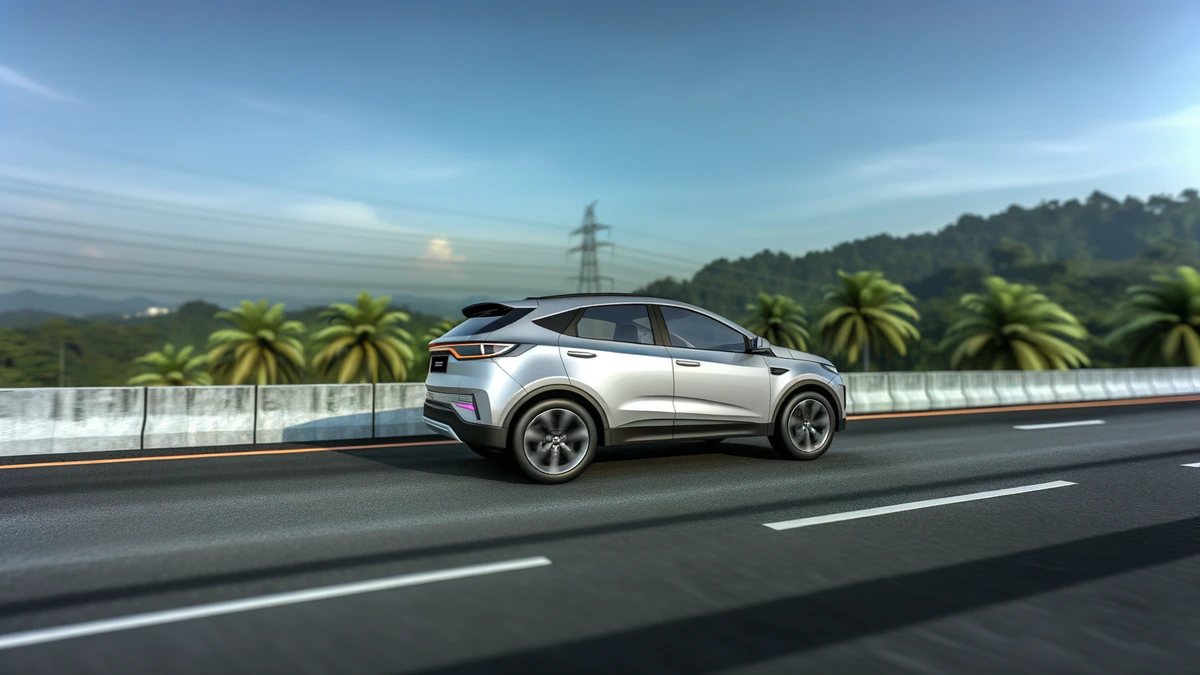
Proton eMas 5 Driven: Range, Charging Speed & Value vs BYD Atto 3 in Malaysia
By EV Sifu Editorial Team | April 16, 2026
The Proton eMas 5 is Malaysia’s most talked-about EV right now — and for good reason. It carries the national brand’s badge, Geely’s engineering pedigree, and a price tag that puts it squarely against the segment-leading BYD Atto 3. We drove one for a week across KL, Putrajaya, and a Kuala Lumpur–Ipoh return run to find out if the hype is justified.
Here is our full Proton eMas 5 review Malaysia — no marketing spin, just real-world numbers and an honest verdict for Malaysian buyers.

Full Specs at a Glance
Before we get into the road impressions, here are the key numbers you need to know about the Proton eMas 5 for the Malaysian market.
| Specification | Proton eMas 5 Standard Range | Proton eMas 5 Extended Range |
|---|---|---|
| Price (OTR, excl. insurance) | RM 109,800 | RM 129,800 |
| Battery Capacity | 49 kWh (LFP) | 66 kWh (LFP) |
| CLTC Range | 430 km | 560 km |
| Motor Output | 218 hp / 343 Nm | 218 hp / 343 Nm |
| Drivetrain | FWD (Single Motor) | FWD (Single Motor) |
| 0–100 km/h | 7.5 seconds | 7.5 seconds |
| Top Speed | 175 km/h | 175 km/h |
| AC Charging | 11 kW (Type 2) | 11 kW (Type 2) |
| DC Fast Charging | 80 kW (CCS2) | 80 kW (CCS2) |
| DC Charge Time (10–80%) | ~37 min | ~48 min |
| Boot Space | 460 L | 460 L |
| Frunk | No | No |
| V2L (Vehicle-to-Load) | No | No |
| Wheelbase | 2,765 mm | 2,765 mm |
| ADAS Level | Level 2 | Level 2 |
Note: Prices are OTR without insurance. CLTC figures are manufacturer-claimed under Chinese test cycle conditions. Real-world range will differ — see our range test below.
Driving Impressions
The eMas 5 drives with a composure that immediately signals quality engineering. On the smooth stretches of the Maju Expressway, the ride is supple and quiet — genuinely impressive for a sub-RM130k car.
Geely’s SEA (Sustainable Experience Architecture) platform underpins this vehicle, the same bones that support the Smart #1 and Volvo EX30. That heritage shows: the body control through sweeping highway bends is confident, not floaty, and there is minimal torque steer despite the front-wheel-drive layout.
In Sport mode, the 218 hp motor delivers a satisfying surge off the line. It is not face-distorting quick, but the 7.5-second 0–100 km/h claim feels accurate — punchy enough for highway merges and overtakes without drama.
Eco mode, which most Malaysian owners will use daily, dials back the throttle response noticeably. It is still perfectly adequate for city driving, and it is the mode that gets you the best range. The one-pedal driving regeneration is adjustable in three stages, though the strongest setting is not quite as aggressive as what you get in a Hyundai Ioniq 5.
NVH (noise, vibration, harshness) is a genuine highlight. Wind noise is well-suppressed up to 120 km/h — the typical Plus highway cruising speed. Road noise from coarser surfaces does creep in, but it is never intrusive.
Real-World Range Test Malaysia
We tested the Extended Range variant (66 kWh) and achieved 430–445 km in real-world Malaysian conditions — roughly 79% of the 560 km CLTC claim. That is an honest and respectable result for our hot, humid climate.
Here is how the numbers broke down across our test scenarios:
- City driving (KL, heavy traffic, 25–28°C, aircon on): ~5.9–6.3 km/kWh → estimated real range: ~385–415 km
- Highway at 110 km/h (Plus Highway, aircon 23°C): ~5.1–5.4 km/kWh → estimated real range: ~340–360 km
- Mixed city + highway (our main commute loop): ~5.6 km/kWh average → real range: ~370 km
- KL–Ipoh return (highway, 110–120 km/h): Arrived in Ipoh with 38% remaining from a full charge. Topped up at a DC fast charger in Rawang (10 min, 80 kW). Return was uneventful with 12% on arrival back in KL.
The KL–Ipoh run is a real litmus test for Malaysian EV ownership. The eMas 5 handled it without anxiety — one quick pitstop, minimal disruption. If you are making regular outstation trips, the Extended Range variant is the one to choose.
For daily commuters within the Klang Valley doing 60–80 km/day, the Standard Range (49 kWh) is more than sufficient and saves you RM20,000. Do not over-buy if you do not need it.
Malaysia’s EV charging network is expanding rapidly. According to our March 2026 EV sales and infrastructure data, Malaysia is approaching 7% EV market share — and public charger density on the North-South Expressway has improved significantly to support longer journeys.
Charging Speed & Experience
The eMas 5 supports up to 80 kW DC fast charging via CCS2 — adequate, though not class-leading. In our test at a ChargEV 80 kW DC charger in Bangsar South, the Extended Range variant went from 10% to 80% in 48 minutes, closely matching Proton’s claimed figure.
Peak charging speed was observed between 15% and 55% SOC — the “sweet spot” where the battery management system (BMS) allows full 80 kW input. Above 55%, the charge rate begins to taper, which is normal LFP behaviour.
The LFP (lithium iron phosphate) chemistry is worth understanding. LFP is more thermally stable and degrades less over time — but it is less energy-dense, which is why the pack is larger for the same range output compared to NMC alternatives. For Malaysian buyers worried about long-term battery health in our tropical climate, LFP is actually a reassuring choice. Our LFP vs NMC battery guide explains the trade-offs in detail.
On AC charging, the 11 kW onboard charger is genuinely useful. Plugged into a 32A Type 2 home charger overnight, the Extended Range battery goes from empty to full in approximately 6 hours. If you are setting up a home charging point, read our Best Home EV Charger Malaysia 2026 guide for compatible Type 2 options and installation costs.
One notable omission: no Vehicle-to-Load (V2L) function. The BYD Atto 3 and Hyundai Ioniq 5 both offer V2L at comparable price points. It is not a dealbreaker, but if you camp, run outdoor equipment, or want emergency home power backup, this is a gap to note.
Interior, Tech & Practicality
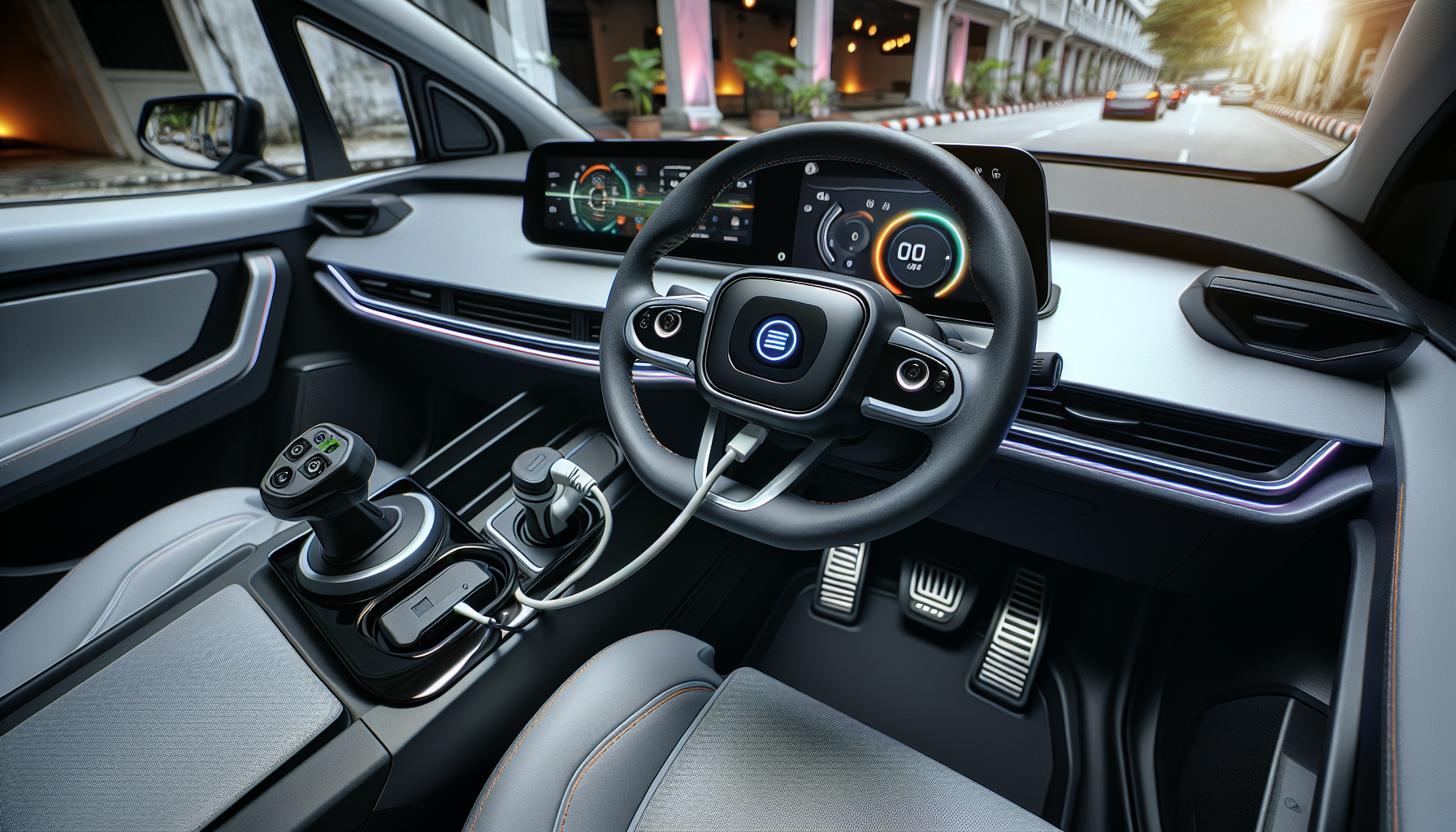
Step inside and the eMas 5 makes an immediately strong impression. The quality of materials, fit, and finish punches above the RM109k–RM130k price bracket — credit to Geely’s manufacturing expertise.
The centrepiece is a 15.4-inch central touchscreen running GKUI (Geely’s proprietary OS), paired with a 10.25-inch digital instrument cluster. The UI is responsive and slick, though the learning curve for first-time users is steeper than what you get with a Tesla or Ioniq.
Physical controls for the air conditioning have been largely moved to the touchscreen, which will frustrate some drivers. On the plus side, voice command recognition in Bahasa Malaysia is surprisingly competent — a genuine selling point for local buyers.
Rear passenger space is generous thanks to the 2,765 mm wheelbase. A 175 cm adult sits comfortably behind another 175 cm adult, with adequate knee room and headroom. The panoramic glass roof adds to the airy feel, though UV protection is a must-check under Malaysian sun — ensure the UV coating is rated appropriately before committing.
Boot space of 460 L is class-competitive. There is no frunk, which is a slight miss given the front-wheel-drive layout leaves empty space up front. BYD managed to offer a small frunk on the Atto 3 — Proton should have done the same.
ADAS includes adaptive cruise control, lane centring, automatic emergency braking, and blind spot monitoring. The lane centring works well on highways with clear markings, though it requires occasional steering input on older roads — much like most Level 2 systems in this class.
Pros & Cons
✅ Pros
- Competitive pricing — RM109,800 undercuts many equivalently equipped rivals
- Proton’s nationwide service network (600+ service centres) gives peace of mind
- LFP battery chemistry = long-term durability in Malaysia’s tropical heat
- Refined ride and excellent NVH for the segment
- 11 kW AC onboard charger is above average for the price
- Bahasa Malaysia voice command is genuinely useful
- Geely SEA platform is proven and internationally validated
- Attractive interior quality and premium feel
❌ Cons
- 80 kW DC charging is not best-in-class — rivals offer 100–150 kW
- No Vehicle-to-Load (V2L) function
- No frunk despite front-wheel-drive layout
- CLTC range figures are optimistic — expect 75–80% in Malaysian conditions
- GKUI infotainment has a steeper learning curve than some competitors
- FWD only — no AWD option currently available in Malaysia
Comparison: eMas 5 vs BYD Atto 3 vs Hyundai Ioniq 5
The Proton eMas 5 competes directly with the BYD Atto 3 and, at a stretch, the Hyundai Ioniq 5. Here is how they stack up on the metrics that matter most to Malaysian buyers.
| Feature | Proton eMas 5 (Extended) | BYD Atto 3 (Extended) | Hyundai Ioniq 5 (Standard) |
|---|---|---|---|
| Price (OTR excl. insurance) | RM 129,800 | RM 149,800 | RM 199,888 |
| Battery | 66 kWh LFP | 60.5 kWh LFP | 58 kWh NMC |
| WLTP / CLTC Range | 560 km (CLTC) | 480 km (CLTC) | 385 km (WLTP) |
| Real-World Range (our estimate) | ~370–430 km | ~340–380 km | ~320–360 km |
| DC Charging Speed | 80 kW | 88 kW | 100 kW |
| AC Charging Speed | 11 kW | 7 kW | 11 kW |
| 0–100 km/h | 7.5 sec | 7.3 sec | 8.5 sec |
| Drivetrain | FWD | FWD | RWD |
| V2L | No | No | Yes |
| Frunk | No | Yes (small) | No |
| Boot Space | 460 L | 440 L | 527 L |
| Service Network (Malaysia) | 600+ centres | ~100+ centres | ~50+ centres |
| Warranty (Battery) | 8 years / 160,000 km | 8 years / 150,000 km | 8 years / 160,000 km |
Note: All prices subject to change. BYD Atto 3 and Ioniq 5 figures are based on latest available Malaysian market data at time of publication. Real-world range estimates are our editorial assessments based on Malaysian driving conditions and comparable published data.
The eMas 5’s killer advantage is its price-to-battery-size ratio. You get 66 kWh of LFP for RM129,800 — the Atto 3 asks RM20,000 more for a smaller pack. The Ioniq 5 justifies its premium with faster DC charging, V2L, and a more resolved driving experience, but it is in a different financial league.
For the majority of Malaysian middle-income buyers stepping into their first EV, the eMas 5 Extended Range is the most compelling package in this segment right now.
FAQ — Proton eMas 5 Malaysia
1. What is the Proton eMas 5 price in Malaysia for 2026?
The Proton eMas 5 starts at RM109,800 for the Standard Range and RM129,800 for the Extended Range, OTR without insurance. These prices make it one of the most competitively priced C-segment electric SUVs in Malaysia, undercutting the BYD Atto 3 by approximately RM20,000 at the top variant level. Check with Proton’s official website or authorised dealers for the latest promotional pricing and loan packages.
2. What is the real-world range of the Proton eMas 5 in Malaysia?
In real Malaysian conditions, expect 370–430 km from the Extended Range (66 kWh) and approximately 300–350 km from the Standard Range (49 kWh). The CLTC-claimed figures of 560 km and 430 km are measured under idealised Chinese test cycle conditions — Malaysian heat, highway speeds, and heavy aircon use will reduce range to around 75–80% of those claims. For daily Klang Valley commutes, both variants are more than adequate.
3. How fast does the Proton eMas 5 charge?
The eMas 5 supports 80 kW DC fast charging (CCS2), getting the Extended Range from 10% to 80% in approximately 48 minutes. On AC, the 11 kW Type 2 onboard charger fully charges the Extended Range battery overnight in around 6 hours from empty. The 80 kW DC limit is below some rivals — the BYD Atto 3 peaks at 88 kW and the Ioniq 5 at 100 kW — but it is sufficient for practical long-distance travel with planned stops. Read our EV Charging Speed Explained guide to understand what these numbers mean for your day-to-day life.
4. Is the Proton eMas 5 better than the BYD Atto 3?
The eMas 5 is better value at its price point — it offers a larger battery, a faster AC charger, and a more extensive service network than the Atto 3 for less money. The Atto 3 counters with a slightly higher DC charging peak (88 kW vs 80 kW), a small frunk, and BYD’s proven aftersales reputation in Malaysia. For most buyers, the eMas 5 Extended Range at RM129,800 is the stronger buy unless you specifically value the BYD ecosystem or have an established BYD service centre nearby. Our full BYD Atto 3 Malaysia review has a detailed breakdown of that car’s strengths.
5. Should I buy the Standard or Extended Range Proton eMas 5?
Choose the Standard Range (RM109,800) if your daily drive is under 80 km and you have reliable home charging. The Extended Range (RM129,800) is the smarter pick if you make regular outstation trips, live in an apartment without guaranteed home charging access, or simply want the peace of mind of a larger buffer. The RM20,000 price gap is significant, but the extra 17 kWh of usable capacity meaningfully changes the car’s capability for Malaysian long-distance driving scenarios.
Verdict — Is the Proton eMas 5 Worth Buying in Malaysia?
Yes — the Proton eMas 5 is genuinely the best value C-segment electric SUV you can buy in Malaysia right now. It combines Geely’s proven SEA platform with competitive pricing, a large LFP battery, and crucially, Proton’s unmatched nationwide service network.
It is not perfect. The 80 kW DC charging cap will frustrate buyers who have experienced faster hardware elsewhere, and the lack of V2L or a frunk feels like missed opportunities at this price. But these are compromises, not dealbreakers.
For a Malaysian household buying their first EV — perhaps upgrading from a Proton X50 or X70 — the eMas 5 is a psychologically safe and technically strong choice. The brand is familiar, the service centre is likely 10 minutes away, and the car itself delivers on its promises in the ways that matter most: real-world range, daily usability, and interior quality.
If budget allows and you want the extra convenience features (V2L, faster DC charging), look at the Hyundai Ioniq 5 — but be prepared to spend RM70,000 more. For most buyers, that gap simply does not justify itself.
The eMas 5 Extended Range at RM129,800 earns our EV Sifu Recommended badge for Q2 2026.
EV Sifu Rating: 8.4 / 10
- Value for Money: 9/10
- Range (Real-World): 8/10
- Charging Speed: 7/10
- Interior & Tech: 8/10
- Driving Dynamics: 8/10
- Practicality: 8/10
- After-Sales Support: 9/10
Also thinking about running costs? Check our guide on road tax for electric cars in Malaysia 2026 — eMas 5 owners benefit from significantly reduced annual road tax versus a petrol SUV equivalent.
Article last updated: April 16, 2026. Specifications and prices are accurate as of publication date and subject to change by Proton Malaysia. Always verify with an authorised dealer before purchase.