
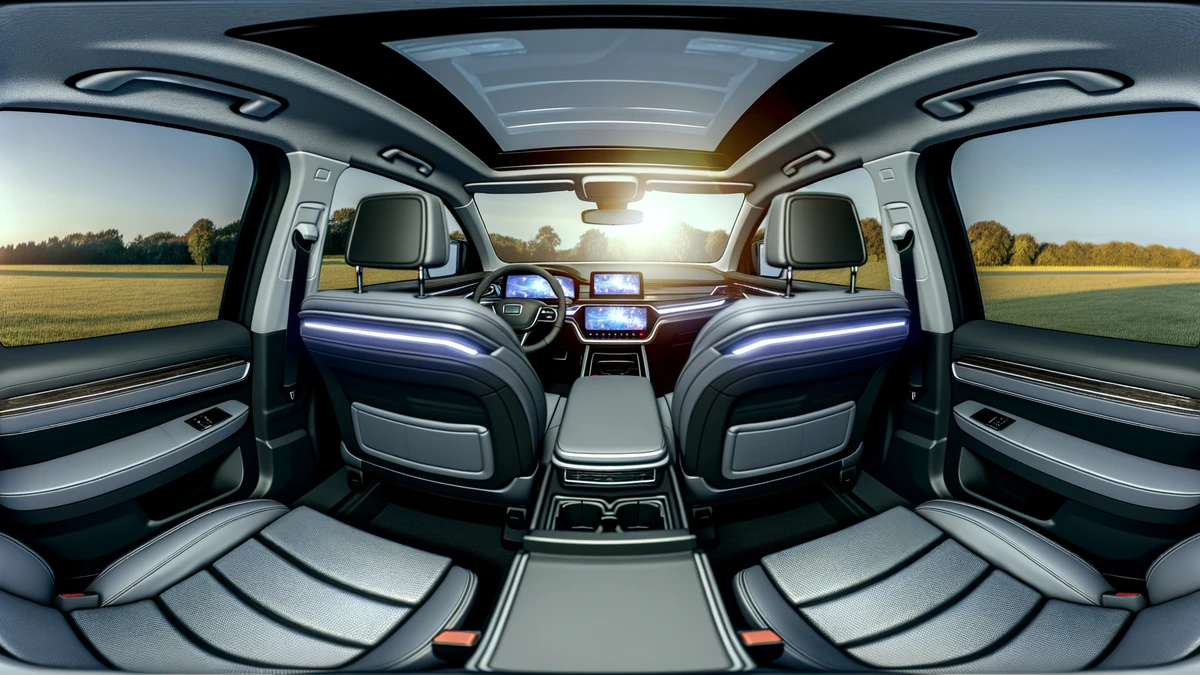
Choosing the best family EV in Malaysia has never been easier — or harder. The market has exploded with options in 2026, from budget-friendly local heroes to premium European electric SUVs. Whether you need boot space for strollers, ISOFIX anchors for child seats, or a third row for the in-laws, there is an electric vehicle that fits your family’s needs.
In this complete buyer’s guide, we break down the seven best family EVs currently available (or arriving soon) in Malaysia. We compare them on the factors that matter most to Malaysian families: price, safety, boot space, range, and child seat compatibility.
ALSO READ: Cheapest EVs in Malaysia 2026
What Makes a Good Family EV?
Before diving into individual models, let’s talk about what Malaysian families should prioritise when shopping for an electric vehicle.
Safety first. Look for a 5-star ASEAN NCAP or Euro NCAP rating, plus Level 2 ADAS features like autonomous emergency braking (AEB), lane-keeping assist, and blind-spot monitoring. These are no longer luxuries — they are essentials.
Boot space matters. A family EV should offer at least 400 litres of boot space. You need room for strollers, school bags, and weekend balik kampung luggage. Some EVs also have a front trunk (frunk) for extra storage.
Child seat anchors. Malaysian law requires children under 135 cm to use a child restraint system. ISOFIX anchor points make installation safer and easier. Check how many ISOFIX points each car has and whether three child seats can fit across the rear bench.
Range for road trips. Malaysia is not a small country. A Kuala Lumpur to Penang drive is roughly 370 km. You want an EV with at least 400 km of real-world range to handle interstate trips without range anxiety, especially now that the DC charging network along the PLUS highway has grown significantly.
Running costs. One of the biggest advantages of an EV for families is the dramatically lower running cost. Charging at home costs a fraction of petrol, and EVs enjoy dramatically lower road tax — as low as RM20/year under the 2026 kW-based structure (85% cheaper than petrol equivalents).
ALSO READ: EV vs Petrol Running Cost Malaysia
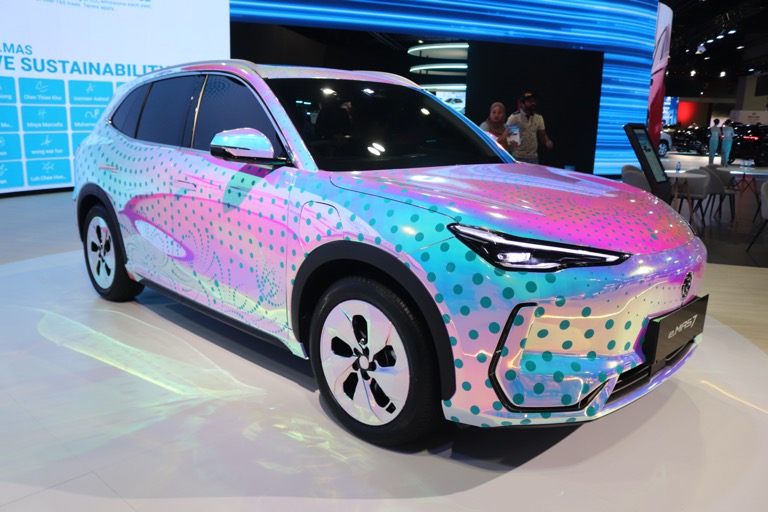
1. Proton eMAS 7 — Best Value Family EV
The Proton eMAS 7 is the most affordable electric SUV in Malaysia right now, starting from just RM99,800 for the Prime variant. For families on a budget, nothing else comes close.
Key Specs
- Price: RM99,800 (Prime) / RM115,800 (Premium)
- Motor: 218 PS, 320 Nm
- Battery: 49.52 kWh (Prime) / 60.22 kWh (Premium) LFP
- Range (WLTP): 345 km (Prime) / 410 km (Premium)
- 0-100 km/h: 6.9 seconds
- Boot space: 440 litres
- Safety: 5-star ASEAN NCAP (92.57 points — highest ever recorded)
- ISOFIX: 2 rear anchor points
The eMAS 7 scored the highest ASEAN NCAP rating ever at 92.57 points, making it one of the safest cars on Malaysian roads, period. It is the first Proton to feature Level 2 ADAS, including adaptive cruise control, lane centring, and automatic emergency braking.
For families, the 440-litre boot is generous for this price point, and the Premium variant’s 410 km range is sufficient for a KL-to-Penang trip with one charging stop. The PHEV version (from RM105,800 with launch rebate) offers up to 943 km combined range for families who want a petrol safety net.
The trade-off? The cabin materials feel budget-oriented compared to pricier rivals, and the rear seat could use more thigh support for taller passengers. But at under RM100k, it is hard to argue with the value proposition.
Verdict: Best choice for budget-conscious Malaysian families who want a safe, practical electric SUV without breaking the bank.
ALSO READ: BYD Atto 3 vs Chery Omoda E5 Malaysia 2026
2. BYD Atto 3 — Best All-Rounder
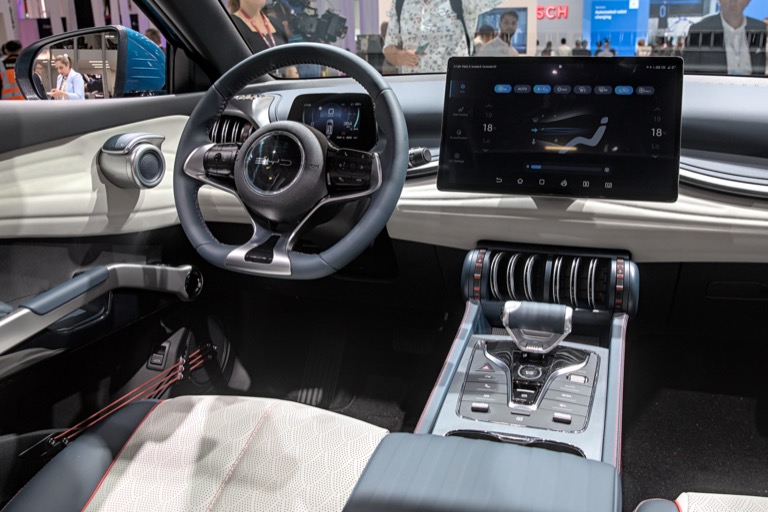
The BYD Atto 3 has been Malaysia’s best-selling EV for good reason. It strikes an excellent balance of price, range, safety, and features that makes it the default recommendation for most families.
Key Specs
- Price: RM123,800 — RM167,800
- Motor: Up to 308 hp (2026 facelift)
- Battery: Up to 74.88 kWh LFP Blade Battery
- Range: Up to 650 km (CLTC) / ~520 km real-world estimate
- 0-100 km/h: ~7.3 seconds (Standard) / faster on Extended Range
- Boot space: 440 litres (rear seats up)
- Safety: 5-star Euro NCAP
- ISOFIX: 2 rear anchor points
The 2026 facelift is a significant upgrade. The new 74.88 kWh battery with 800-volt architecture means faster DC charging at up to 150 kW — a 10-80% charge takes around 30 minutes. The motor now produces 308 hp, borrowed from the BYD Seal platform.
The interior remains one of the quirkiest in its class, with the rotating 12.8-inch touchscreen and guitar-string-inspired door panels. Boot space at 440 litres matches the Proton eMAS 7, but the BYD’s overall cabin quality feels a step above.
For families, the BYD Atto 3 offers the best combination of range and affordability. The Extended Range variant can comfortably handle KL-to-JB or KL-to-Penang without charging stress.
Verdict: The safest mainstream pick for Malaysian families — proven, practical, and now with significantly improved range and charging speed.
Note: 2026 facelift pricing is estimated and subject to confirmation upon official Malaysian launch.
3. Tesla Model Y — Best Tech and Longest Range
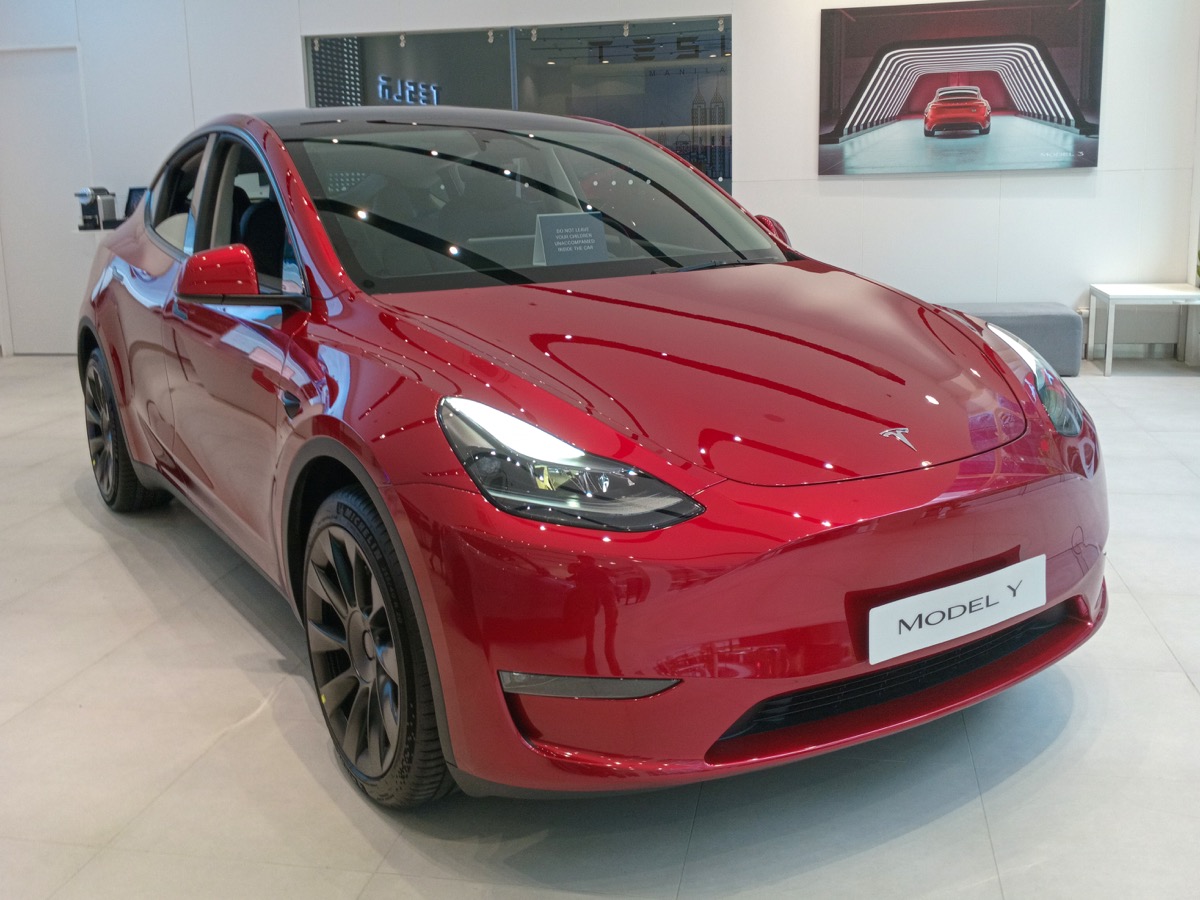
The Tesla Model Y needs no introduction. It is the world’s best-selling car (not just EV) and remains the benchmark for technology, range, and charging infrastructure in Malaysia.
Key Specs (Long Range RWD)
- Price: RM216,450 (LR RWD) / RM242,450 (LR AWD) / RM260,000 (Model Y L 6-seater)
- Motor: 201 hp (RWD) / 462 PS (Model Y L)
- Battery: 75 kWh (Standard) / 82 kWh (Model Y L)
- Range (WLTP): 533 km (LR RWD) / 681 km (Model Y L)
- 0-100 km/h: 5.6 seconds (LR RWD) / 5.0 seconds (Model Y L)
- Boot space: 854 litres (rear seats folded) + 117 litres frunk
- Safety: 5-star Euro NCAP
- ISOFIX: 2 rear anchor points + 2 in third row (Model Y L)
The big news for families is the Tesla Model Y L, launched in Malaysia in April 2026 at RM260,000. This stretched 6-seater version adds a third row, making it the only Tesla with genuine 7-seater practicality (technically 6 seats in a 2-2-2 configuration). With 681 km WLTP range, it obliterates range anxiety for even the longest Malaysian road trips.
Tesla’s Supercharger network in Malaysia is growing rapidly, and the Model Y’s software updates keep adding features over time. The 15-inch central touchscreen controls everything, which some parents find distracting — but the Autopilot and Full Self-Driving features make highway cruising a breeze.
The standard Model Y’s 854-litre boot (seats folded) is the largest in this comparison. Add the 117-litre frunk and you have serious cargo capacity for family holidays.
Verdict: Best choice for tech-savvy families who want maximum range and the best charging network. The Model Y L is the only true 6-seater EV option in Malaysia right now.
ALSO READ: BYD Atto 3 vs Tesla Model Y Malaysia
4. Volvo EX30 — Safest Compact Choice
The Volvo EX30 is the smallest car on this list, but do not underestimate it. Volvo’s reputation for safety is well-earned, and the EX30 packs an impressive amount of tech into a compact package.
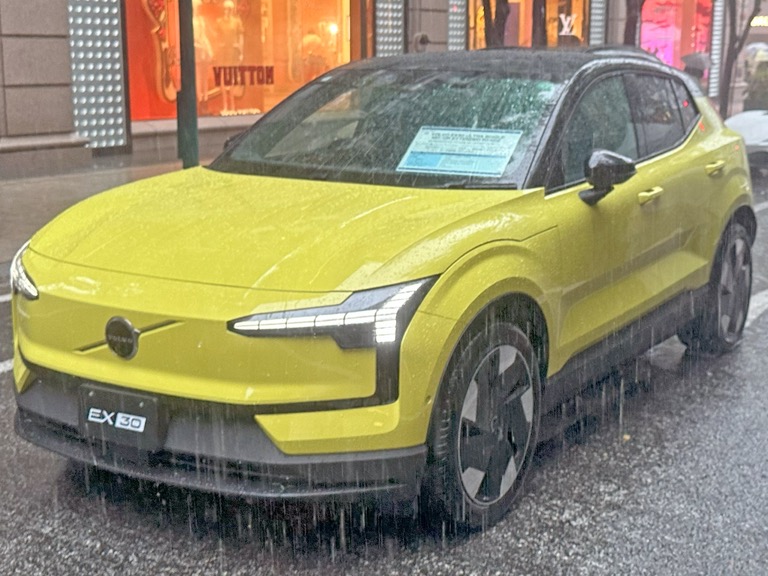
Key Specs
- Price: RM188,888 (Plus) / RM208,888 (Ultra) / RM228,888 (Ultra Twin Performance)
- Motor: 272 hp (single motor) / 428 hp (Twin Performance)
- Battery: 69 kWh NMC
- Range (WLTP): 476 km (single motor) / 450 km (Twin)
- 0-100 km/h: 5.3 seconds (single) / 3.6 seconds (Twin Performance)
- Boot space: 318 litres + 7 litres frunk
- Safety: 5-star Euro NCAP
- ISOFIX: 2 rear ISOFIX + 1 front passenger ISOFIX (3 total)
The EX30 stands out for having three ISOFIX points — two in the rear and one on the front passenger seat. This is rare and extremely valuable for families with multiple young children.
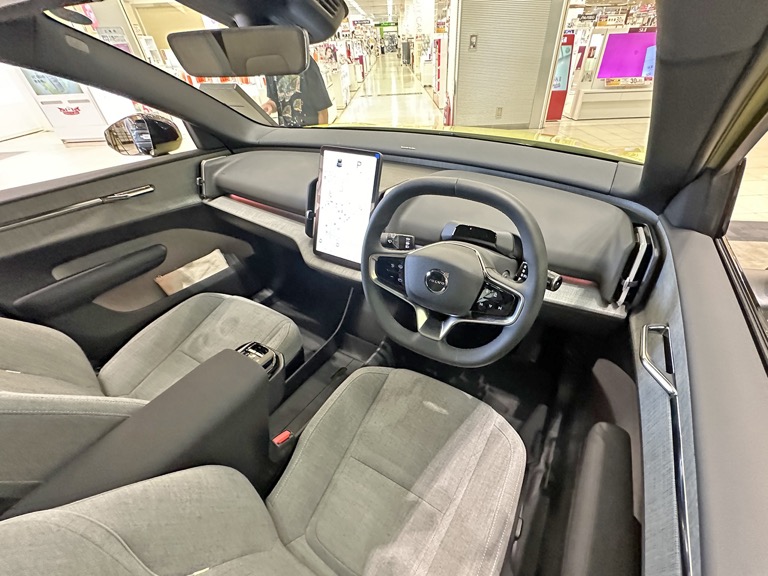
Charging is fast at 175 kW DC, getting you from 10-80% in just 28 minutes. The CKD (locally assembled) status helps keep the price competitive against imports.
The catch for families? That 318-litre boot is tight. You will struggle to fit a large stroller and luggage simultaneously. The EX30 is best suited for urban families with one or two children who prioritise safety and city manoeuvrability over outright cargo space.
Verdict: Best for urban families who want uncompromising safety in a compact, easy-to-park package. Not ideal for large families or frequent road-trippers.
ALSO READ: Complete Home EV Charging Guide Malaysia
5. Mercedes-Benz EQB 350 4MATIC — Best Premium 7-Seater
If budget is less of a concern and you want a true premium 7-seater EV, the Mercedes-Benz EQB 350 4MATIC is your best (and currently only) option in Malaysia.
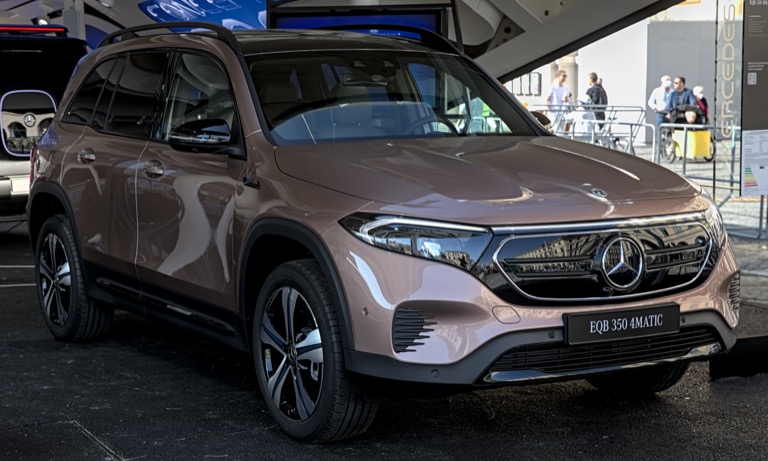
Key Specs
- Price: RM333,888
- Motor: 292 hp, 520 Nm (dual motor AWD)
- Battery: 66.5 kWh lithium-ion
- Range (WLTP): 423 km
- 0-100 km/h: 6.0 seconds
- Boot space: 495 litres (5-seat mode) / reduced with third row up
- Safety: 5-star Euro NCAP
- ISOFIX: 2 rear + 2 third row (4 total)
The EQB is the only EV in Malaysia that offers seven seats as standard, with ISOFIX anchors in both the second and third rows — four ISOFIX points total. For families with three or more children, this is significant.
The Mercedes cabin quality is in a different league — soft-touch materials, the MBUX infotainment system with “Hey Mercedes” voice control, and ambient lighting create a genuinely premium environment. The 4MATIC all-wheel-drive system provides excellent traction in wet conditions, which matters during Malaysia’s monsoon season.
The downside is the 423 km range — the shortest in this comparison. For a car at this price, you would expect more. The 100 kW DC charging speed is also slower than competitors. And at RM333,888, it costs more than three Proton eMAS 7s.
Verdict: The ultimate choice for well-heeled families who need seven seats and premium luxury. The range limitation means it is better suited for city-to-suburb duty rather than frequent long-distance travel.
6. Kia EV5 — Best Upcoming Family EV (Expected 2026)
The Kia EV5 has not officially launched in Malaysia yet, but it is widely expected to arrive in late 2026 given its presence in neighbouring Thailand and Singapore. It deserves a mention because it could reshape the mid-range family EV segment.
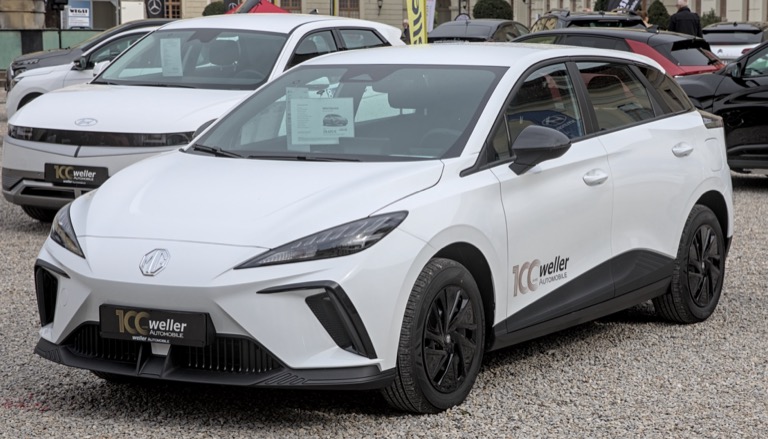
Expected Specs
- Expected price: ~RM160,000 — RM230,000 (estimated from Thai pricing)
- Motor: 160 kW (218 hp)
- Battery: 58 kWh / 81.4 kWh options
- Range: Up to 530 km (Long Range)
- Boot space: ~513 litres
- Safety: 5-star Euro NCAP
- ISOFIX: 2 rear anchor points
The EV5 is built on the same E-GMP platform as the Kia EV6 and Hyundai Ioniq 5, which means 800-volt architecture and ultra-fast 350 kW DC charging capability. A 10-80% charge could take as little as 18 minutes with the right charger.
With around 513 litres of boot space and a competitive price-to-range ratio, the EV5 could become a serious threat to the BYD Atto 3 and Tesla Model Y in the family EV space. We will update this guide once official Malaysian pricing and specs are confirmed.
Verdict: One to watch. If Kia prices it aggressively in Malaysia, it could become the best value mid-range family EV.
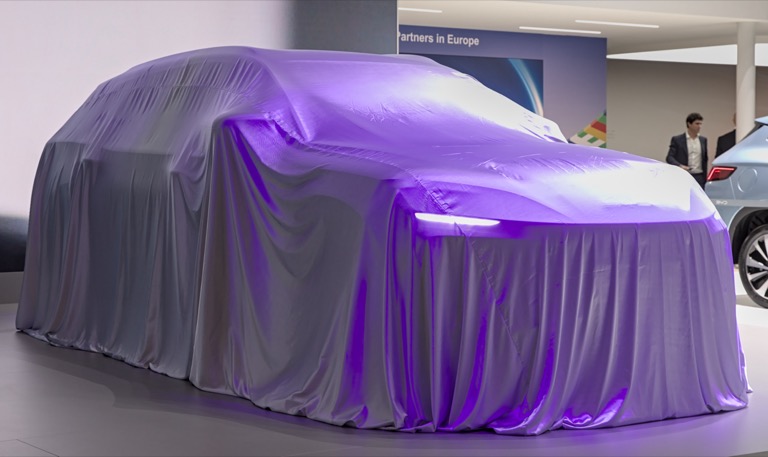
7. BYD Seal U DM-i — Best PHEV Family SUV (Coming Soon)
The BYD Seal U DM-i is a plug-in hybrid SUV that BYD has confirmed is “being studied” for the Malaysian market. While not a pure EV, it deserves mention for families who want electrified driving with a petrol safety net.
Expected Specs
- Expected price: ~RM150,000 — RM200,000 (estimated)
- Powertrain: 1.5L turbo + electric motor (DM-i PHEV)
- Combined range: 800+ km
- EV-only range: ~80 km
- Boot space: ~425 litres
- Safety: 5-star Euro NCAP (European market)
The Seal U DM-i would fill an important gap — a mid-size family SUV with genuine electric capability but without the range anxiety of a pure EV. For families who frequently drive to kampung areas where charging infrastructure is sparse, this could be the ideal compromise.
Verdict: A promising option for families in areas with limited charging infrastructure. Expected to arrive in Malaysia within 2026.
ALSO READ: EV Charger Installation Malaysia — Condo and Landed
Comparison Table: Best Family EVs in Malaysia 2026
| Model | Price (RM) | Range (WLTP) | Boot Space | Safety | ISOFIX | Seats | DC Charging |
|---|---|---|---|---|---|---|---|
| Proton eMAS 7 | 99,800 — 115,800 | 345 — 410 km | 440 L | 5-star ASEAN NCAP | 2 | 5 | 80 kW |
| BYD Atto 3 | 123,800 — 167,800 | ~420 — 520 km | 440 L | 5-star Euro NCAP | 2 | 5 | 150 kW |
| Kia EV5 (expected) | ~160,000 — 230,000 | Up to 530 km | ~513 L | 5-star Euro NCAP | 2 | 5 | 350 kW |
| Volvo EX30 | 188,888 — 228,888 | 450 — 476 km | 318 L | 5-star Euro NCAP | 3 | 5 | 175 kW |
| Tesla Model Y | 199,000 — 260,000 | 533 — 681 km | 854 L* | 5-star Euro NCAP | 2-4 | 5-6 | 250 kW |
| Mercedes EQB | 333,888 | 423 km | 495 L | 5-star Euro NCAP | 4 | 7 | 100 kW |
*Tesla Model Y boot space measured with rear seats folded
Road Trip Readiness: Can These EVs Handle Malaysian Highways?
Malaysian families love road trips — balik kampung during Hari Raya, school holiday trips to Langkawi or Cameron Highlands, and weekend drives to Melaka for cendol. So how do these EVs stack up for real-world highway driving?
The DC charging network along the PLUS highway has expanded significantly in 2026. Major rest stops like Tapah, Seremban, Ayer Keroh, and Pagoh now have DC fast chargers from providers like Gentari, ChargEV, and Tesla Superchargers.
For a KL to Penang run (~370 km):
- Tesla Model Y LR and BYD Atto 3 Extended Range can do it on a single charge in ideal conditions
- Proton eMAS 7 Premium (410 km) can make it with careful driving, but one quick top-up is recommended
- Mercedes EQB (423 km) should manage but with little margin
- Volvo EX30 (476 km) handles it comfortably despite the smaller battery
For a KL to JB run (~320 km), all models on this list can handle it without charging stops.
Pro tip: Plan your charging stops using apps like PlugShare or ChargEV. Arrive at the charger between 10-20% SoC for the fastest charging speeds, and charge to 80% rather than 100% — the last 20% takes disproportionately longer.
ALSO READ: Best Home EV Charger Malaysia
EV Ownership Costs for Families
One of the biggest reasons families are switching to EVs is the dramatic savings on running costs. Here is how the numbers stack up:
Road Tax (Cukai Jalan)
From January 1, 2026, EVs in Malaysia pay road tax under a new kW-based structure that is approximately 85% lower than equivalent petrol vehicles. For example, a Proton eMAS 7 (200kW) pays ~RM260/year, a BYD Atto 3 (150kW) pays ~RM160/year, and a Tesla Model Y (220kW) pays ~RM320/year. Compare this to a petrol SUV paying RM400–RM800/year.
Fuel Savings
Charging an EV at home using TNB’s domestic tariff costs approximately RM0.04-0.06 per km. Compare that to a petrol SUV at roughly RM0.15-0.20 per km. For a family driving 1,500 km per month, that is a savings of RM150-240 monthly.
Maintenance
EVs have fewer moving parts — no engine oil changes, no transmission servicing, no timing belt replacements. Typical annual maintenance for an EV is RM300-800, compared to RM1,500-3,000 for a petrol SUV.
Total Cost of Ownership (5 Years)
Over 5 years and 90,000 km, a family can save approximately RM30,000-50,000 by choosing an EV over a comparable petrol SUV, even before accounting for the purchase price difference.
ALSO READ: EV Road Tax Malaysia 2026 — Rates and Exemptions
Which Family EV Should You Buy?
Here is our quick recommendation based on your family’s priorities:
| Your Priority | Best Pick |
|---|---|
| Lowest price | Proton eMAS 7 (from RM99,800) |
| Best all-rounder | BYD Atto 3 (from RM123,800) |
| Maximum range | Tesla Model Y LR (533-681 km) |
| 6-7 seats needed | Tesla Model Y L or Mercedes EQB |
| Urban safety focus | Volvo EX30 (3 ISOFIX points) |
| Premium luxury | Mercedes-Benz EQB (RM333,888) |
| Best value mid-range (coming soon) | Kia EV5 |
Frequently Asked Questions
What is the cheapest family EV in Malaysia?
The Proton eMAS 7 is the cheapest family EV in Malaysia, starting from RM99,800 for the Prime variant. It offers 345 km of range, 440 litres of boot space, and a 5-star ASEAN NCAP safety rating — exceptional value for families on a budget.
Which EV in Malaysia has 7 seats?
The Mercedes-Benz EQB 350 4MATIC (RM333,888) is the only EV currently sold in Malaysia with seven seats as standard. The new Tesla Model Y L (RM260,000) offers six seats in a 2-2-2 configuration. Both have ISOFIX anchors in the rear rows.
Can I drive an EV from KL to Penang without charging?
Yes, with the right model. The Tesla Model Y Long Range (533 km WLTP) and BYD Atto 3 Extended Range (~520 km real-world) can theoretically complete the ~370 km journey on a single charge in good conditions. However, we always recommend planning at least one charging stop for safety margin, especially when travelling with a full car and luggage.
How many child seats can fit in an EV?
Most 5-seater EVs in this guide can fit two child seats comfortably using ISOFIX anchors, with a third child seat possible using a seatbelt-secured booster in the middle position. The Volvo EX30 is unique in offering three ISOFIX points (including one on the front passenger seat). The Mercedes EQB has four ISOFIX points across its second and third rows.
Is it worth buying an EV for a family in Malaysia?
Absolutely. With road tax as low as RM20–RM280/year (85% cheaper than petrol), home charging costs of just RM0.04-0.06 per km, and significantly lower maintenance costs, a family can save RM30,000-50,000 over 5 years compared to a petrol SUV. The expanding DC charging network along Malaysian highways also makes road trips increasingly convenient.
What is the safest family EV in Malaysia?
The Proton eMAS 7 holds the highest ASEAN NCAP score ever recorded at 92.57 points. The Volvo EX30, Tesla Model Y, BYD Atto 3, and Mercedes EQB all have 5-star Euro NCAP ratings. All models in this guide come with Level 2 ADAS features including autonomous emergency braking.
Do EVs have enough boot space for family road trips?
Most EVs in this guide offer 400+ litres of boot space, which is comparable to petrol SUVs. The Tesla Model Y stands out with 854 litres (seats folded) plus a 117-litre frunk. The Volvo EX30 is the tightest at 318 litres — better suited for urban use. For serious road trips, the Tesla Model Y or Mercedes EQB offer the most practical cargo solutions.
Conclusion
The Malaysian family EV market in 2026 offers genuine choice across every budget. The Proton eMAS 7 makes electric motoring accessible to the masses from under RM100k. The BYD Atto 3 remains the best all-rounder. The Tesla Model Y (and new Model Y L) leads on tech and range. And the Mercedes EQB delivers proper 7-seat luxury.
Whatever your family’s size, budget, or driving needs, there is an EV for you. The savings on fuel, road tax, and maintenance mean the total cost of ownership increasingly favours going electric — especially for families who drive a lot.
Ready to make the switch? Visit evsifu.com.my to explore our range of home EV chargers and make your family’s transition to electric driving as seamless as possible. A home charger is the single best investment for EV family life — wake up to a full battery every morning without ever visiting a petrol station again.
Browse our complete home EV charging guide or shop for the best home EV chargers in Malaysia today.