
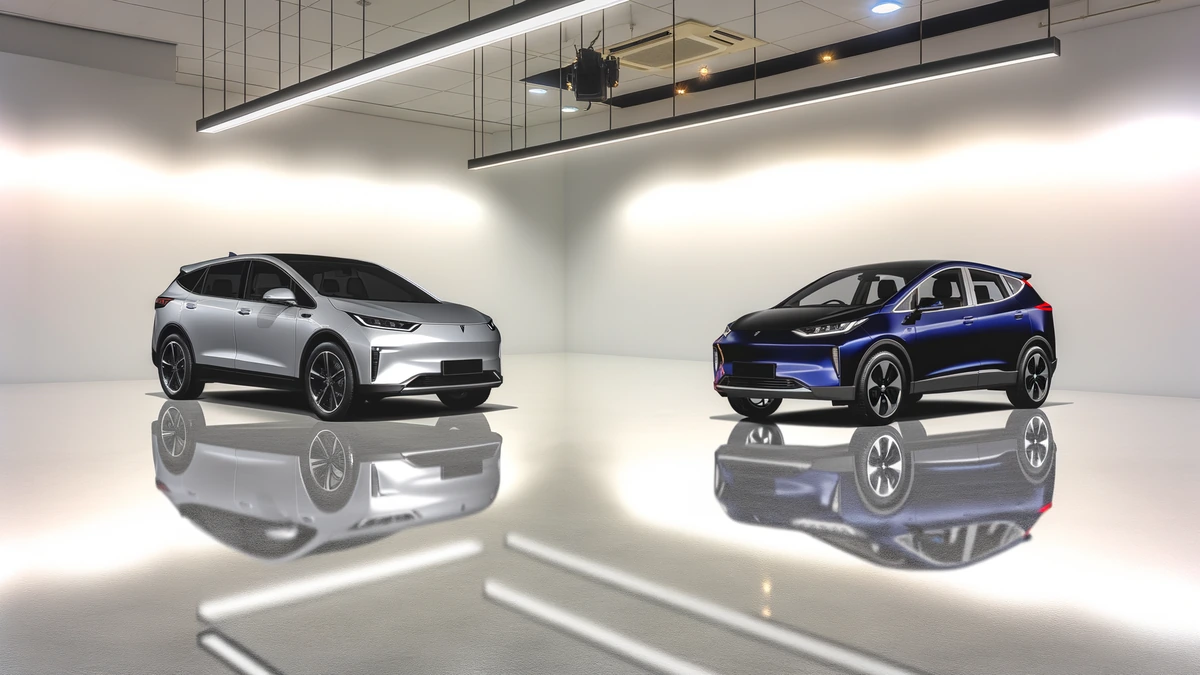
Two of the most talked-about affordable EVs in Malaysia right now are the BYD Atto 3 and the Chery Omoda E5 — and for good reason. Both sit comfortably within the EV under RM150,000 sweet spot, targeting the same pragmatic Malaysian buyer who wants to ditch petrol without emptying the bank account.
But which one actually makes more sense for your driveway in 2026? We’ve gone deep on specs, real-world ownership costs, charging practicality, and after-sales peace of mind so you don’t have to. This is the verdict.
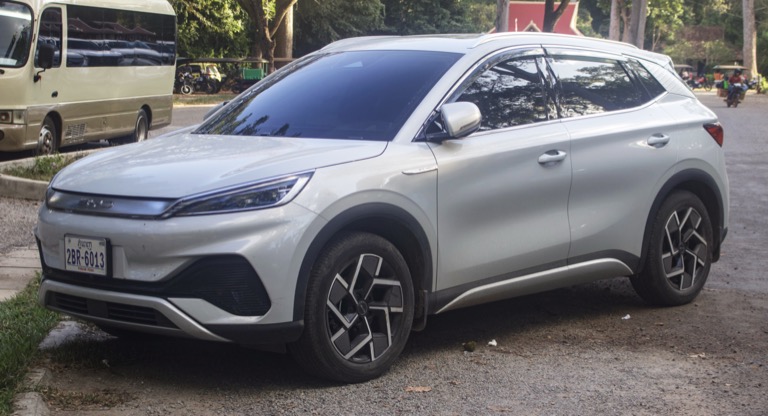
Side-by-Side Specs at a Glance
Before diving into the nuances, here’s a clean comparison of both models based on their officially available Malaysian-market specifications.
| Specification | BYD Atto 3 (Standard Range) | Chery Omoda E5 |
|---|---|---|
| Price (OTR, est.) | From ~RM149,800 | From ~RM139,800 |
| Battery Capacity | 49.92 kWh (LFP Blade) | 61 kWh (NMC) |
| WLTP Range | ~345 km | ~430 km |
| Motor Output | 150 kW / 310 Nm | 150 kW / 340 Nm |
| 0–100 km/h | ~7.3 seconds | ~7.8 seconds |
| AC Charging (Max) | 7 kW (onboard) | 11 kW (onboard) |
| DC Fast Charging (Max) | 60 kW | 80 kW |
| Boot Space | 440 litres | 380 litres |
| Dimensions (L×W×H mm) | 4,455 × 1,875 × 1,615 | 4,432 × 1,825 × 1,588 |
| Warranty | 6 years / 150,000 km (vehicle); 8 years / 160,000 km (battery) | 5 years / 150,000 km (vehicle); 8 years / 160,000 km (battery) |
| Drive Type | Front-Wheel Drive | Front-Wheel Drive |
Note: Prices are estimated OTR for Malaysia as of April 2026 and may vary by dealership. Always confirm with official distributors for the latest pricing.
ALSO READ: Cheapest EVs in Malaysia 2026: Complete Buyer’s Guide
Price & Value: Which Offers More for Your Ringgit?
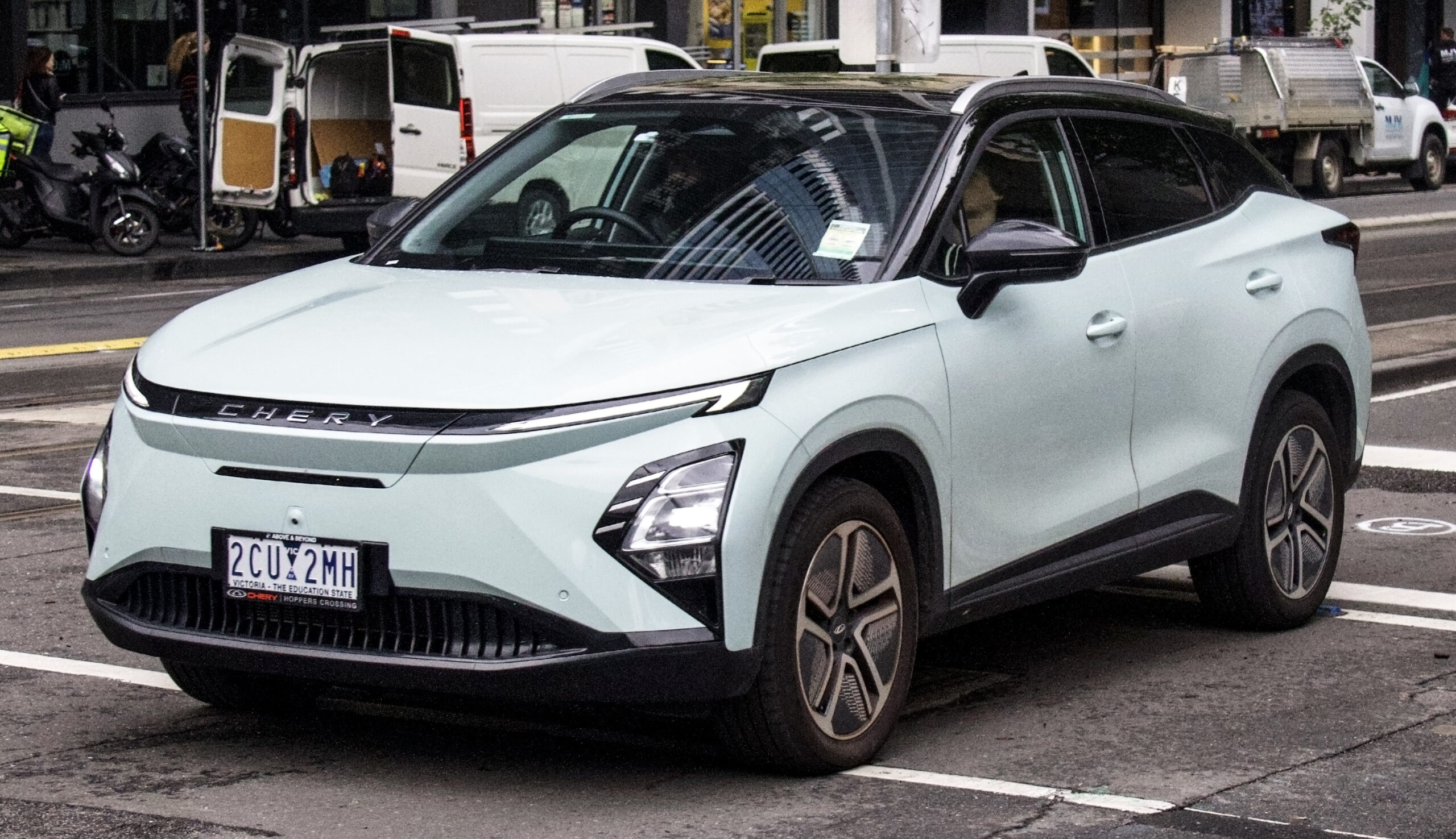
The Chery Omoda E5 is the more affordable entry point, coming in roughly RM10,000 cheaper than the BYD Atto 3 at base price. For a lot of Malaysian families, that difference pays for a year’s worth of home charging or a quality home EV charger installation.
However, value is never just about the sticker price. The Atto 3 carries the weight of BYD‘s proven global track record, stronger resale confidence, and a more established local service network. The Omoda E5 counters with a larger battery and faster charging at a lower price — on paper, it punches above its weight class.
Winner: Chery Omoda E5 — better spec-per-ringgit at the base price point.
Real-World Range & Performance
The Omoda E5’s larger 61 kWh battery gives it a meaningful range advantage, with WLTP figures suggesting around 430 km versus the Atto 3’s ~345 km. In real-world Malaysian conditions — highway driving to KL Sentral, traffic crawling on the LDP, blasting the air-con at 16°C — expect roughly 75–80% of those WLTP numbers.
That puts the Omoda E5 at approximately 320–345 km of usable real-world range, while the Atto 3 sits closer to 255–275 km. For city commuters, the Atto 3’s range is perfectly adequate. But for regular KL–Penang or KL–JB travellers, the Omoda E5’s buffer is genuinely meaningful.
On performance, both produce 150 kW, but the Atto 3’s 0–100 km/h time of ~7.3 seconds edges out the Omoda E5’s ~7.8 seconds — a small but noticeable difference for those who enjoy a confident merge on the highway.
ALSO READ: BYD Atto 3 vs Tesla Model Y Malaysia: Complete Comparison
Charging Speed & Practicality in Malaysia
Charging is where the Omoda E5 pulls noticeably ahead. Its 80 kW DC fast charging capability versus the Atto 3’s 60 kW means shorter stops at DC chargers. On a 10–80% fast charge, the Omoda E5 can top up in around 28 minutes, while the Atto 3 takes closer to 35–40 minutes.
At home, the gap widens further. The Omoda E5 supports 11 kW AC charging, meaning a full overnight charge takes roughly 6 hours. The Atto 3’s 7 kW onboard charger stretches that to about 7.5 hours — still manageable for overnight charging, but the Omoda E5 gives more flexibility if you plug in later at night.
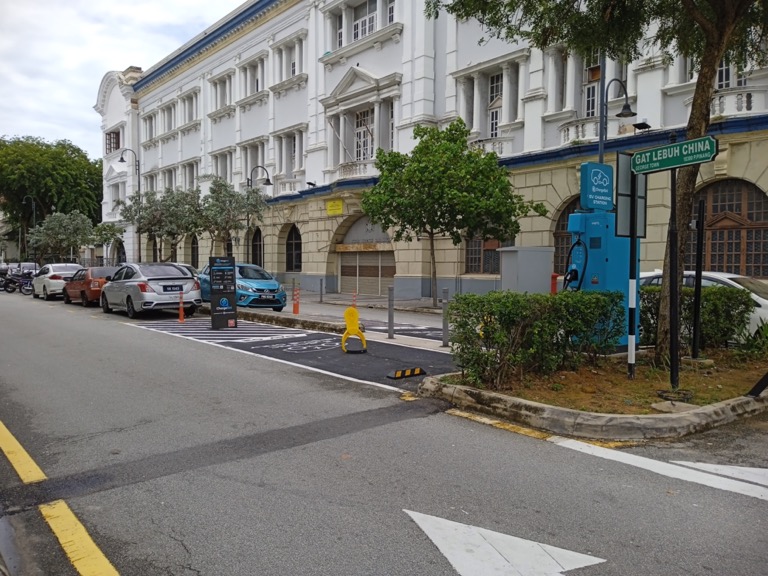
Malaysia’s DC fast charging network is expanding rapidly, with major corridors like the North-South Expressway now well-covered. Both cars are compatible with CCS2 connectors, the standard across Malaysian public chargers.
Winner: Chery Omoda E5 — faster DC and AC charging across the board.
ALSO READ: Complete Guide to Home EV Charging in Malaysia 2026
Interior, Boot Space & Daily Practicality
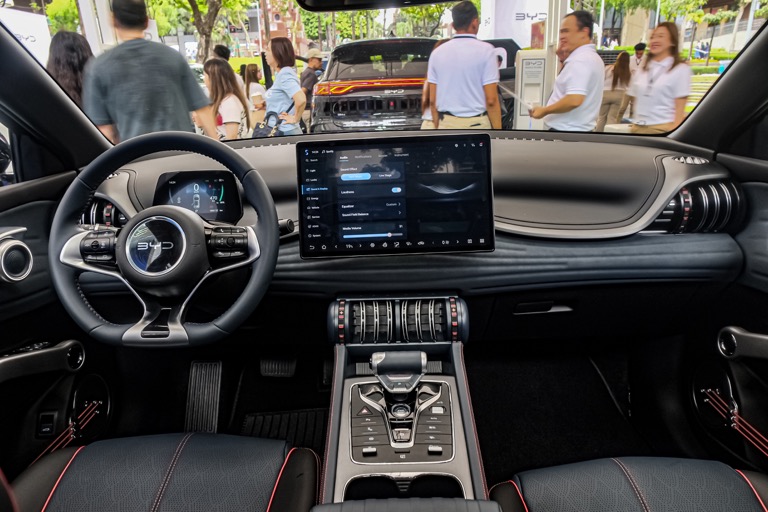
Inside, both cars feel modern and well-equipped for their price bracket. The BYD Atto 3 stands out with its quirky, guitar-string-inspired centre console and a rotating 12.8-inch infotainment screen. The Omoda E5 opts for a cleaner, more conventional dual-screen layout that some buyers may prefer for its simplicity.
On boot space, the Atto 3 wins with 440 litres versus the Omoda E5’s 380 litres. That 60-litre difference matters when you’re loading up for a family road trip to Cameron Highlands or fitting in the weekly Tesco run. Both fold flat for larger items.
Rear passenger space is comparable in both cars, with adequate legroom for most adults. The Atto 3 is slightly wider at 1,875 mm versus 1,825 mm, which translates to marginally more shoulder room for three abreast.
Winner: BYD Atto 3 — more boot space and a slightly wider cabin.
Tech, Safety & Features Comparison
Both models come well-stocked with tech for their segment. Key features include:
- BYD Atto 3: Rotating 12.8″ screen, NFC key card, vehicle-to-load (V2L), 360° camera, 7 airbags, DiPilot ADAS suite
- Chery Omoda E5: Dual 10.25″ screens, wireless Apple CarPlay/Android Auto, Level 2 ADAS, 6 airbags, auto parking assist
The Atto 3’s V2L (vehicle-to-load) capability is a genuine differentiator — you can power appliances, laptops, or camping gear directly from the car’s battery. The Omoda E5 doesn’t offer this feature.
On safety, the Atto 3 edges ahead with 7 airbags versus 6, and BYD’s DiPilot ADAS system is well-regarded. Both offer lane-keep assist, adaptive cruise control, and autonomous emergency braking.
Winner: BYD Atto 3 — V2L, extra airbag, and a proven ADAS system.
ALSO READ: EV vs Petrol Car Running Costs in Malaysia: Real Numbers
Ownership Costs & After-Sales
One of the biggest advantages of EV ownership in Malaysia is the road tax exemption until 2027. Both the Atto 3 and Omoda E5 benefit from this, saving owners approximately RM300–400 per year compared to equivalent petrol SUVs.
Electricity costs for either car work out to roughly RM3–5 per 100 km on home charging (at TNB domestic rates), compared to RM12–18 per 100 km for a comparable petrol SUV. That’s a saving of roughly RM2,000–3,000 per year for average Malaysian driving distances.
BYD has a stronger service network in Malaysia with more authorised service centres, while Chery is still building out its presence. BYD also offers a longer vehicle warranty at 6 years/150,000 km versus Chery’s 5 years/150,000 km. Battery warranties are identical at 8 years/160,000 km.
Winner: BYD Atto 3 — better warranty and a more established service network.
ALSO READ: EV Road Tax Malaysia 2026: How Much Do You Really Pay?
Pros & Cons
BYD Atto 3
- ✅ Proven brand with strong resale value
- ✅ V2L capability for powering external devices
- ✅ Larger boot space (440L)
- ✅ 7 airbags and mature ADAS
- ✅ Longer vehicle warranty (6 years)
- ❌ Smaller battery, less range (~345 km WLTP)
- ❌ Slower DC charging (60 kW max)
- ❌ Only 7 kW AC onboard charger
- ❌ Higher starting price (~RM149,800)
Chery Omoda E5
- ✅ Lower price — ~RM10,000 cheaper
- ✅ Bigger battery (61 kWh) with longer range (~430 km WLTP)
- ✅ Faster DC charging (80 kW) and AC charging (11 kW)
- ✅ Modern coupe-SUV styling
- ❌ Newer brand, less proven resale
- ❌ Smaller boot (380L)
- ❌ No V2L feature
- ❌ 6 airbags (vs Atto 3’s 7)
- ❌ Smaller service network in Malaysia
Category Winners & Final Recommendation
| Category | Winner |
|---|---|
| Price & Value | Chery Omoda E5 |
| Range | Chery Omoda E5 |
| Performance | BYD Atto 3 |
| Charging | Chery Omoda E5 |
| Interior & Boot Space | BYD Atto 3 |
| Tech & Safety | BYD Atto 3 |
| Ownership Costs | BYD Atto 3 |
Our verdict: The BYD Atto 3 wins on ownership confidence — better warranty, stronger resale, V2L, and a more established network. If you value peace of mind and plan to keep the car long-term, it’s the safer bet.
The Chery Omoda E5 is the smarter buy if you prioritise range, charging speed, and upfront savings. It delivers more usable range and faster charging at a lower price — a compelling package for buyers willing to bet on a newer brand.
ALSO READ: Best Home EV Charger Malaysia 2026: 7kW vs 11kW
Frequently Asked Questions
Which is cheaper to maintain — BYD Atto 3 or Chery Omoda E5?
Both are very affordable to maintain as EVs have fewer moving parts than petrol cars. The BYD Atto 3 has a slight edge due to BYD’s larger service network in Malaysia and longer vehicle warranty (6 years vs 5 years). Annual servicing costs for both are estimated at RM200–400.
Can I drive from KL to Penang in the Chery Omoda E5 without charging?
The KL–Penang distance is approximately 370 km. With the Omoda E5’s ~430 km WLTP range (real-world ~320–345 km), you would likely need one quick DC charge stop along the way. The Atto 3 would definitely require at least one stop.
Is the BYD Atto 3’s Blade battery safer than the Omoda E5’s NMC battery?
BYD’s LFP (Lithium Iron Phosphate) Blade battery is inherently more thermally stable than NMC chemistry, meaning it’s less prone to thermal runaway. However, the Omoda E5’s NMC battery has passed all required safety certifications. Both are safe for everyday use.
Does the Chery Omoda E5 have V2L (vehicle-to-load)?
No, the Omoda E5 does not currently offer V2L. The BYD Atto 3 supports V2L, allowing you to power external devices and appliances directly from the car’s battery — useful for camping or emergency power backup.
Which EV holds its value better in Malaysia?
BYD currently holds resale value better due to stronger brand recognition and a larger presence in Malaysia. As Chery/Omoda builds its reputation and service network, resale values may improve over time.
ALSO READ: EV Charger Installation Malaysia: Condo & Landed Guide
dfewf