
How to Install an EV Charger in Your Condo in Malaysia: The Complete 2026 Guide
Installing an EV charger in a condo in Malaysia is one of the biggest headaches EV owners face — but it doesn’t have to be. Whether your JMB is supportive or skeptical, this guide walks you through every step of the EV charging condo Malaysia journey: from getting approval, to choosing the right charger, to managing costs with and without government subsidies.
If you live in a high-rise apartment or condominium, you’ve probably asked yourself: “Can I even install an EV charger in my parking bay?” The answer is yes — but you’ll need to navigate JMB approvals, electrical requirements, and safety regulations first.
This guide covers everything you need to know in 2026, including a ready-to-use JMB application letter template, real examples of condo rules in KL and Selangor, and a full cost breakdown.
Table of Contents
- Can You Legally Install an EV Charger in a Condo?
- Step-by-Step: The Condo Resident’s Journey
- JMB Application Template Letter
- Real Condo Rules: KL & Selangor Examples
- Cost Breakdown
- What If Your JMB Says No?
- The 3.3kW Low-Power Solution
- Best EV Chargers for Condo (2026)
- EV Charging Etiquette
- TNB Tariff & Regulations
- Future-Proofing: Dynamic Load Management
- FAQ
Can You Legally Install an EV Charger in a Malaysian Condo?
The short answer: yes, but it’s not your decision alone.
Under the Strata Management Act 2013, common property — including parking bays — falls under the jurisdiction of the Joint Management Body (JMB) or Management Corporation (MC). This means you must obtain written approval from your JMB/MC before installing any EV charging equipment.
Is There a “Right to Charge” Law in Malaysia?
As of April 2026, Malaysia has no formal “right to charge” law. Unlike the UK (which mandates EV charging provisions in new buildings) or Singapore (which has established clear guidelines), Malaysian condo residents must still rely on JMB cooperation.
However, there are positive developments:
- PLANMalaysia guidelines now require new multi-level strata housing to have a minimum of 2% EV charging bays (EVCB) from the total number of parking bays, or at least one EVCB at visitor parking
- The Suruhanjaya Tenaga (Energy Commission) has published updated safety standards for EV charging installations
- Several state governments are exploring right-to-charge provisions
Key distinction: You do NOT need Bomba (Fire & Rescue) approval for a private charger in your own parking bay. Bomba approval is only required for public or communal chargers shared by multiple residents.
ALSO READ: Complete Home EV Charging Guide Malaysia
Step-by-Step: The Condo Resident’s Journey to EV Charging
Step 1: Check Your Condo’s Existing Rules
Before writing any letters, find out where your condo stands:
- Check the house rules — Some condos already have EV charging guidelines
- Ask your property manager — They may have processed similar requests before
- Review AGM minutes — EV charging may have been discussed previously
- Check if other residents have chargers — Precedent makes approval much easier
Pro tip: In KL and Selangor, condos like Setia Sky Residences, The Fennel, and Seri Riana Residence already allow private EV charger installations. Use these as examples when making your case.
Step 2: Write a Formal Application to Your JMB/MC
Your application letter should include:
- Your details — Unit number, parking bay number, contact info
- Technical proposal — Charger model, power rating, installation plan
- Electrical assessment — Proof that your installation won’t overload the building
- Safety compliance — Confirmation of RCD Type B protection, certified installer
- Insurance — Your willingness to carry additional liability if required
- Professional installer credentials — Grade H wireman or licensed contractor details
ALSO READ: Best Home EV Charger Malaysia
JMB Application Template Letter (Ready to Use)
To: The Chairperson, Joint Management Body / Management Corporation
[Condo Name]
[Address]From: [Your Name]
Unit [XX-XX], Parking Bay No. [XXX]Date: [Date]
RE: Application for Private EV Charger Installation at Designated Parking Bay
Dear Sir/Madam,
I am writing to formally request approval to install a private Electric Vehicle (EV) charger at my designated parking bay (No. [XXX]) in [Condo Name].
Proposed Installation Details:
- Charger Model: [e.g., Wallbox Pulsar Plus 7.4kW]
- Power Rating: [e.g., 7.4 kW, single-phase]
- Connector Type: Type 2 (IEC 62196)
- Installer: [Company Name], licensed electrical contractor (Grade H wireman)
- Safety Features: RCD Type B protection, dedicated MCB, ELCB, emergency isolator switch
Electrical Requirements:
- A dedicated sub-meter will be installed at my cost (estimated RM300–RM800) to ensure separate billing
- The installation will use dedicated 6mm² or 10mm² cabling from my unit’s distribution board
- Total additional load: approximately 32A (7.4kW) — within safe limits for the building’s electrical infrastructure
Safety Compliance:
- Installation will comply with MS IEC 61851 (EV charging safety standards)
- RCD Type B protection will be installed to prevent DC leakage (as required by ST guidelines)
- All work will be performed by a Suruhanjaya Tenaga-certified contractor
- A Wiring Certificate will be issued upon completion and submitted to the management office
Insurance & Liability:
- I undertake full responsibility for the charger and its operation
- I am willing to provide proof of additional insurance coverage if required by the JMB/MC
I kindly request that this application be reviewed at the next committee meeting. I am available to present the technical details in person or to arrange a site visit with the installer.
Thank you for your consideration.
Yours faithfully,
[Your Name]
[Contact Number]
[Email Address]
Step 3: Prepare for the JMB Committee Meeting
Many JMBs will review your application at a committee meeting. Be ready to:
- Address fire safety concerns — Bring data: EV fire rates are approximately 1 in 100,000 compared to 15 in 100,000 for petrol vehicles. EVs are statistically safer.
- Explain sub-metering — Reassure the committee that you’ll pay for your own electricity separately
- Show precedent — Name other Malaysian condos that already allow EV charging
- Offer a trial period — Some JMBs are more comfortable approving a 6-month trial first
- Present the 3.3kW option — If the building’s electrical capacity is a concern, offer to use a low-power smart charger
Step 4: Arrange Electrical Assessment & Sub-Meter
Once approved:
- Hire a certified electrical contractor (Grade H wireman)
- Schedule a site assessment — The contractor will check your DB capacity, cable routing distance, and whether a TNB supply upgrade is needed
- Install a dedicated sub-meter — Cost: RM300–RM800. This ensures your EV charging is billed separately from common area electricity
- Apply for TNB supply upgrade if needed — Upgrading from 60A to 100A costs RM800–RM2,000 and takes 2–4 weeks
ALSO READ: EV vs Petrol Running Cost Malaysia
Step 5: Installation Day
A typical condo installation takes 1–2 days:
| Task | Timeline | Details |
|---|---|---|
| Cable routing | Day 1 | Run dedicated cable from DB to parking bay (6mm² or 10mm² depending on distance) |
| MCB & ELCB installation | Day 1 | Dedicated circuit breaker and earth leakage protection |
| RCD Type B installation | Day 1 | Critical — prevents DC leakage into building’s AC grid |
| Charger mounting | Day 1–2 | Wall-mount or pedestal installation at parking bay |
| Testing & commissioning | Day 2 | Full electrical test, connectivity check, first charge test |
| Documentation | Day 2 | Wiring Certificate issued, ST notification filed |
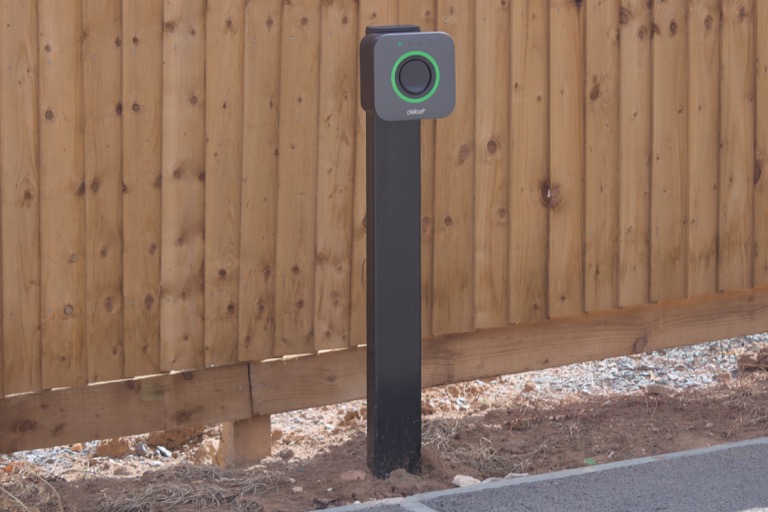
Step 6: Post-Installation Compliance
After installation:
- Submit Wiring Certificate to your JMB/MC
- Notify Suruhanjaya Tenaga through your contractor
- Keep all documentation — approval letter, installation cert, insurance
- Label your parking bay clearly to prevent ICE-ing (petrol cars blocking your charging bay)
Real Condo Rules: Examples from KL & Selangor
Condos That Allow Private EV Charger Installation
| Condo | Location | Policy | Requirements |
|---|---|---|---|
| Setia Sky Residences | KLCC | Allowed with approval | Dedicated sub-meter, certified installer, RCD Type B |
| The Fennel | Sentul | Allowed (guidelines in place) | Application form + technical proposal |
| Seri Riana Residence | Wangsa Maju | Allowed with conditions | Insurance proof, annual inspection |
| i-Zen @ Kiara 2 | Mont Kiara | Allowed | Management pre-approved installer list |
| The Rainz @ Bukit Jalil | Bukit Jalil | Allowed (new development) | Pre-wired parking bays available |
Condos with Communal Charging (Zero Capex Model)
Some condos have partnered with charging providers under a Zero Capex model — the provider installs and maintains the chargers at no cost to the condo. Residents pay per kWh used.
- ChargeSINI — Offers zero upfront cost for condos, charging rate approximately RM0.70/kWh for condos that signed up after August 2024
- Gentari — Shell-backed provider with growing condo partnerships
- JomCharge — Available in select developments
If your JMB is reluctant to approve individual installations, suggest the communal model as a compromise.
ALSO READ: Cheapest EV in Malaysia 2026
Cost Breakdown: EV Charger Installation in a Condo
Full Cost Table
| Cost Component | Condo (RM) | Landed House (RM) |
|---|---|---|
| EV Charger (7kW wallbox) | 1,200–2,600 | 1,200–2,600 |
| Installation labour | 800–1,500 | 500–1,000 |
| Dedicated sub-meter | 300–800 | N/A |
| RCD Type B | 450–700 | 450–700 |
| Cable routing (longer in condos) | 500–1,200 | 200–500 |
| TNB supply upgrade (if needed) | 800–2,000 | 800–2,000 |
| Total (without TNB upgrade) | RM3,250–RM6,800 | RM2,350–RM4,800 |
| Total (with TNB upgrade) | RM4,050–RM8,800 | RM3,150–RM6,800 |
Government Subsidy: RM2,500 Tax Relief
Malaysian EV owners can claim up to RM2,500 in personal tax relief per year for EV charging equipment purchases and installation. This is available through YA2027 under the current incentive scheme.
What qualifies:
- EV charger unit purchase
- Installation costs
- Sub-meter installation
- Safety equipment (RCD, MCB)
Effective savings example: If you’re in the 24% tax bracket and claim the full RM2,500 relief, your actual tax savings = RM600. For those in the top 30% bracket, savings = RM750.
Home Charging vs Public Charging: Monthly Savings
| Scenario | Cost per Full Charge (60 kWh) | Monthly Cost (12 charges) |
|---|---|---|
| Home charging (TNB tariff) | RM13–RM20 | RM156–RM240 |
| Public AC (e.g., ChargEV) | RM24–RM36 | RM288–RM432 |
| Public DC Fast (e.g., Gentari) | RM33–RM48 | RM396–RM576 |
Monthly savings with home charging: RM130–RM340 compared to public DC fast charging. Your charger pays for itself in 8–16 months.
ALSO READ: EV Road Tax Malaysia 2026
What If Your JMB Says No? Overcoming Common Objections
Objection 1: “EVs Are a Fire Risk”
The facts: According to international data, EV fire rates are approximately 1 in 100,000 vehicles, compared to 15 in 100,000 for petrol cars. EVs are statistically 15x less likely to catch fire.
Objection 2: “It Will Overload the Building’s Electrical System”
The solution: Offer to install a 3.3kW smart charger instead of a full 7kW wallbox. Products like the Sparklin Smart Socket draw only 15A — similar to a large air conditioner.
Objection 3: “What About the Electricity Bill?”
The solution: A dedicated sub-meter ensures your charging costs are billed directly to your unit — not to the common area fund.
Objection 4: “We Don’t Have Guidelines for This”
Your move: Offer to help draft the guidelines. Propose a pilot programme for 2–3 interested residents.
Objection 5: “Other Residents Will Object”
Your move: Get written support from other EV owners in the building. Present it as a group request.
The 3.3kW Solution: Low-Power Charging for Older Condos
If your condo’s electrical infrastructure can’t support a 7kW wallbox — or your JMB is concerned about load — a 3.3kW smart charger is the perfect compromise.
| Feature | 3.3kW Smart Charger | 7kW Wallbox |
|---|---|---|
| Power draw | 15A (like a large aircond) | 32A |
| Full charge time (60kWh) | ~18 hours | ~8 hours |
| Overnight charge (8 hours) | ~26 kWh (~160km range) | ~56 kWh (~350km range) |
| Price | RM800–RM1,200 | RM1,200–RM2,600 |
| Installation complexity | Low — plugs into existing socket | Medium — dedicated circuit required |
| JMB approval difficulty | Easier | Harder |
Best for: Condo residents who drive less than 100km/day and can charge overnight.
Best EV Chargers for Condo Installation (2026)
| Model | Power | Connector | Price (RM) | Best For | Smart Features |
|---|---|---|---|---|---|
| Wallbox Pulsar Plus | 7.4 kW | Type 2 | 2,200–2,600 | Tech-savvy users | App control, scheduling, power sharing |
| Autel MaxiCharger AC | 7.4/11 kW | Type 2 | 1,800–2,400 | Value buyers | RFID access, dynamic load balancing |
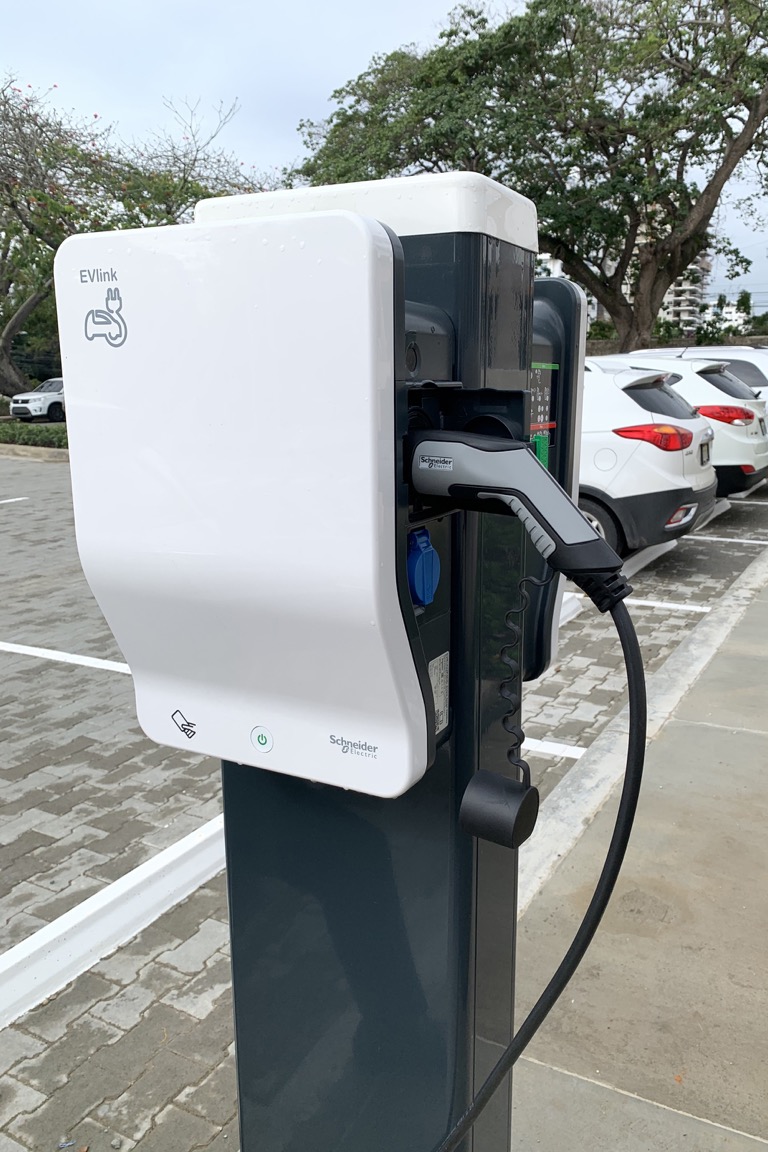
| Schneider Electric EVlink | 7.4 kW | Type 2 | 1,600–2,000 | Reliability-focused | Robust build, minimal smart features |
| Growatt Thor 7K | 7 kW | Type 2 | 1,400–1,900 | Solar owners | Solar integration, excess PV charging |
| BYD Home Charger | 7 kW | Type 2 | 1,200–1,600 | BYD owners | Seamless BYD app integration |
| Sparklin Smart Socket | 3.3 kW | Type 2 | 800–1,200 | Older condos | Low-power, app-controlled, load-safe |
Our recommendation for condos: If your building supports it, the Autel MaxiCharger offers the best balance of price, features, and dynamic load balancing. For older buildings, the Sparklin Smart Socket is the path of least resistance.
ALSO READ: BYD Atto 3 vs Chery Omoda E5
EV Charging Etiquette in Condos
- Don’t hog the charger — If your condo has shared chargers, move your car once charging is complete
- Respect idle fees — Many communal chargers now charge RM0.50–RM1.00 per minute after your session ends
- Don’t block other bays — Keep your charging cable tidy and off the walkway
- Share charging schedules — In buildings with multiple EV owners, coordinate overnight charging windows to avoid peak load
- Report issues promptly — If a communal charger is faulty, notify the management immediately
TNB Tariff & Regulations You Need to Know
TNB EV Charging Rates
| Monthly Usage | Rate per kWh |
|---|---|
| First 200 kWh | RM0.218 |
| 201–300 kWh | RM0.334 |
| 301–600 kWh | RM0.516 |
| 601–900 kWh | RM0.546 |
| 901+ kWh | RM0.571 |
Practical impact: Charging a 60kWh battery from empty typically adds RM13–RM20 to your monthly bill depending on your existing usage tier.
Suruhanjaya Tenaga (ST) Requirements
- All EV charger installations must use a certified installer (Grade H wireman minimum)
- Mode 1 charging (simple domestic socket without safety device) is prohibited by ST guidelines
- Mode 2 (portable EVSE with in-cable control) and Mode 3 (dedicated wallbox) are approved
- A Wiring Certificate must be issued after installation
Future-Proofing: Dynamic Load Management & EVDB
Dynamic Load Balancing (DLB)
Smart chargers like the Autel MaxiCharger and Wallbox Pulsar Plus support DLB — they automatically adjust charging speed based on available building power.
Electric Vehicle Distribution Board (EVDB)
For condos planning more than 5 charger installations, an EVDB is the proper solution:
- Dedicated distribution board for all EV charging circuits
- Centralized monitoring and load management
- Easier maintenance and troubleshooting
- Cost: RM5,000–RM15,000 for the board + installation
Smart Scheduling
Most modern wallboxes allow you to schedule charging for off-peak hours (typically after 10pm).
Frequently Asked Questions (FAQ)
How much does it cost to install an EV charger in a Malaysian condo?
Total installation costs range from RM3,250 to RM6,800 without a TNB supply upgrade, or RM4,050 to RM8,800 with one.
Can I install an EV charger in my condo without JMB approval?
No. Under the Strata Management Act 2013, you must obtain written approval from your JMB or MC before installing any equipment in common property areas.
How long does the JMB approval process take?
Typically 2–8 weeks, depending on your condo’s committee meeting schedule.
What if my condo’s JMB refuses to approve an EV charger?
You have several options: present fire safety data, propose a low-power 3.3kW charger, suggest a communal charging programme, or rally other EV-owning residents to submit a group request.
Do I need to upgrade my TNB supply for a condo EV charger?
Not always. If your unit already has a 100A supply, a 7kW charger (32A) should be fine. If you’re on a 60A supply, you may need an upgrade (RM800–RM2,000).
Is it safe to charge an EV in an underground parking basement?
Yes, when properly installed with all required safety equipment (RCD Type B, MCB, ELCB, and certified charger).
Can I use a regular 3-pin plug to charge my EV in a condo?
Not recommended and not compliant. The Suruhanjaya Tenaga prohibits Mode 1 charging for EV charging.
How long does it take to charge an EV at home in a condo?
With a 7kW wallbox: approximately 8–10 hours for a full charge (60kWh battery). With a 3.3kW charger: approximately 18 hours.
What is the cheapest way to set up EV charging in my condo?
The most affordable option is a 3.3kW smart charger (RM800–RM1,200) with minimal installation costs. Total setup can be as low as RM1,500–RM2,500.
Are there government subsidies for condo EV charger installation?
Yes. You can claim up to RM2,500 in personal income tax relief per year for EV charging equipment and installation costs, available through YA2027.
Ready to Install an EV Charger in Your Condo?
Installing an EV charger in a Malaysian condo takes planning, but it’s absolutely doable. Use the template letter above, come prepared with safety data, and consider the 3.3kW option if your building needs a gentler introduction to EV charging.
Need help choosing the right charger or finding a certified installer? Visit evsifu.com.my for Malaysia’s most comprehensive EV charger selection, professional installation services, and expert advice tailored to condo residents.
Still comparing EVs? Check out our latest guides.
Last updated: April 2026.