

In This Article
Malaysia’s electric vehicle market just posted its strongest quarter ever. A total of 14,591 EVs were registered in Q1 2026, marking a massive 113.7% year-on-year increase from the 6,827 units sold in Q1 2025. This happened despite the overall car market shrinking — total industry volume (TIV) fell 2.9% to 192,531 units.
The message is clear: Malaysians are buying more malaysia ev sales 2026 than ever, even as the broader market cools down. Malaysia EV sales 2026 are on track to smash previous records.
So what’s driving this surge? Let’s break down the numbers by brand, model, and what to expect for the rest of the year.
Q1 2026 EV Sales: Month-by-Month Breakdown
The quarter started with a bang in January and maintained strong momentum throughout.
| Month | EV Registrations | YoY Growth | EV Share of TIV |
|---|---|---|---|
| January 2026 | 6,239 | ~269% | 9.18% |
| February 2026 | 3,635 | 68% | 6.4% |
| March 2026 | 4,717 | 58.5% | 6.95% |
| Q1 2026 Total | 14,591 | 113.7% | ~7.6% |
January’s massive 9.18% EV share — meaning roughly 1 in 11 new cars was electric — set a new monthly record. While February dipped due to the shorter month and seasonal patterns, March bounced back strongly with 4,717 units.
For context, the entire year of 2024 saw roughly 25,000 EV registrations. At the Q1 2026 pace, Malaysia could comfortably exceed 50,000 EV registrations by year-end.
ALSO READ: Malaysia EV Market 2026 Overview
Top EV Brands in Malaysia — Q1 2026 Rankings
Proton has completely transformed the Malaysian EV landscape. The national carmaker dominated Q1 2026 with an estimated 7,455 units, capturing over half of all EV registrations.
| Rank | Brand | Jan 2026 | Feb 2026 | Mar 2026 | Q1 2026 Est. |
|---|---|---|---|---|---|
| 1 | Proton | 3,276 | 1,802 | 2,377 | ~7,455 |
| 2 | BYD | 913 | 469 | 879 | ~2,261 |
| 3 | Chery | 463 | 303 | 265 | ~1,031 |
| 4 | Zeekr | 489 | 191 | 177 | ~857 |
| 5 | Tesla | 176 | ~144 | 338 | ~658 |
Proton: The Undisputed EV King
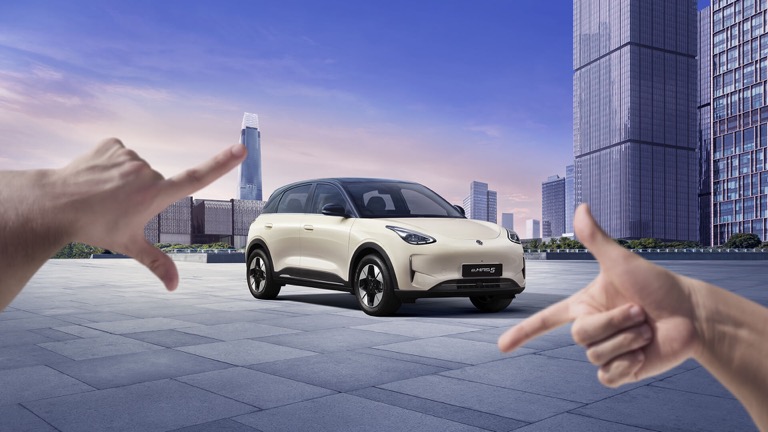
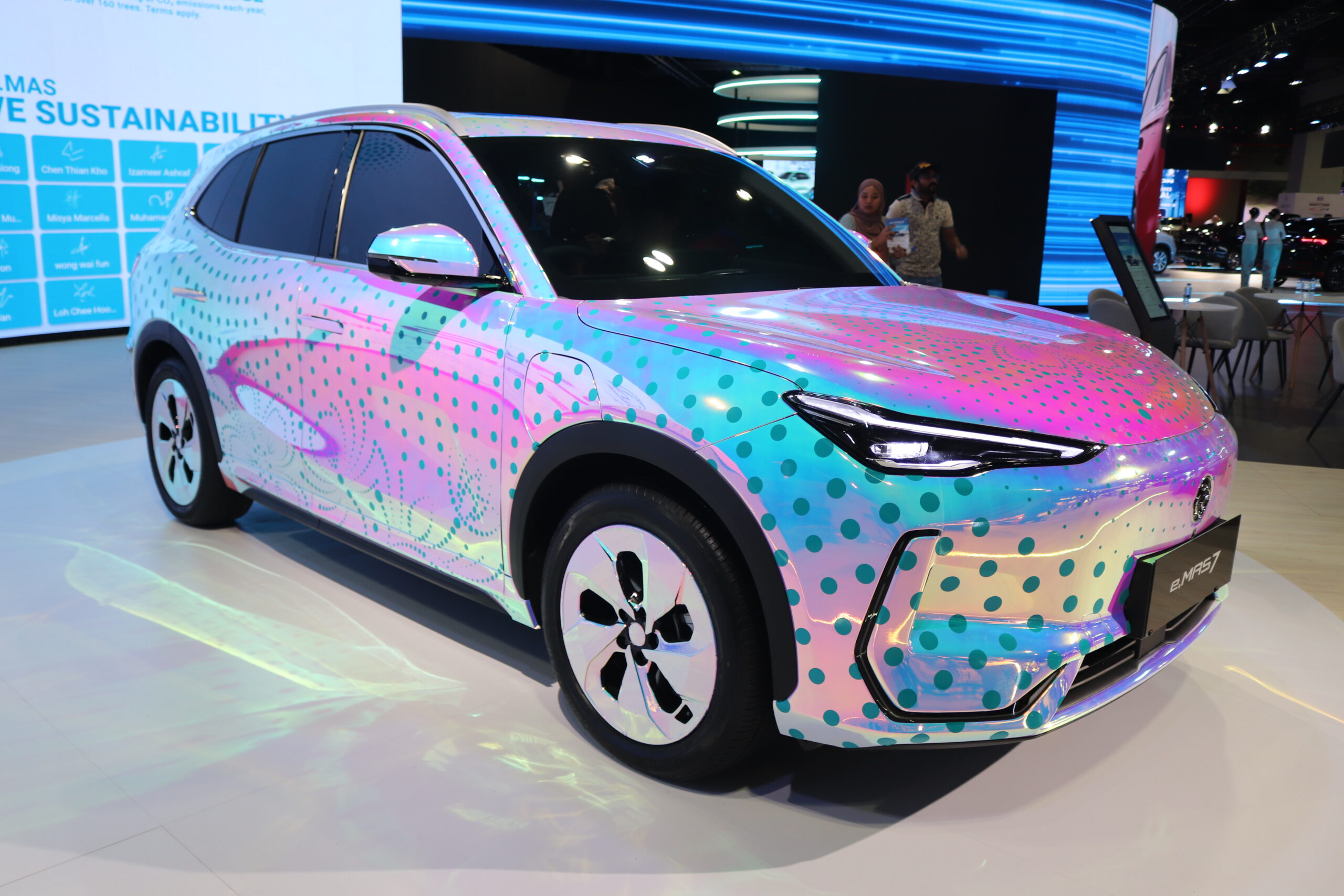
Proton’s dominance is staggering. With the e.MAS 5 and e.MAS 7 both locally assembled (CKD), Proton benefits from competitive pricing and continued tax exemptions for CKD EVs until 2027. The brand sold nearly 3x more EVs than BYD, its closest competitor, in every single month of Q1.
Proton even reported its highest Q1 sales since 2004, driven largely by EV growth.
BYD: Steady but Under Pressure
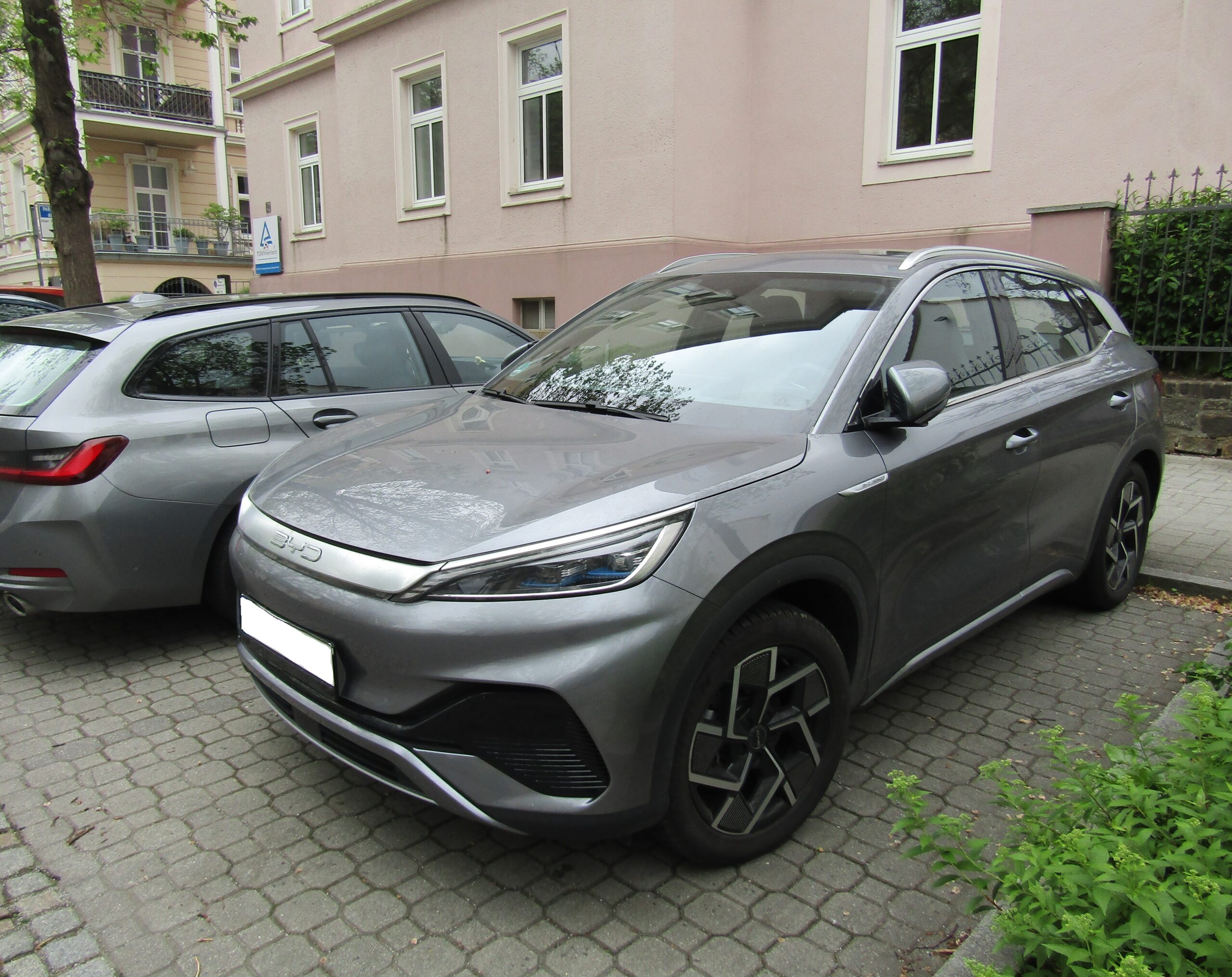
BYD held second place with an estimated 2,261 units across Q1. The BYD Atto 3 remains their bread-and-butter model in Malaysia. However, BYD faces headwinds — reports suggest the company is reconsidering its CKD facility plans in Tanjung Malim due to uncertainty around Malaysia’s EV taxation and local assembly policies.
Chery, Zeekr & Tesla: The Challengers
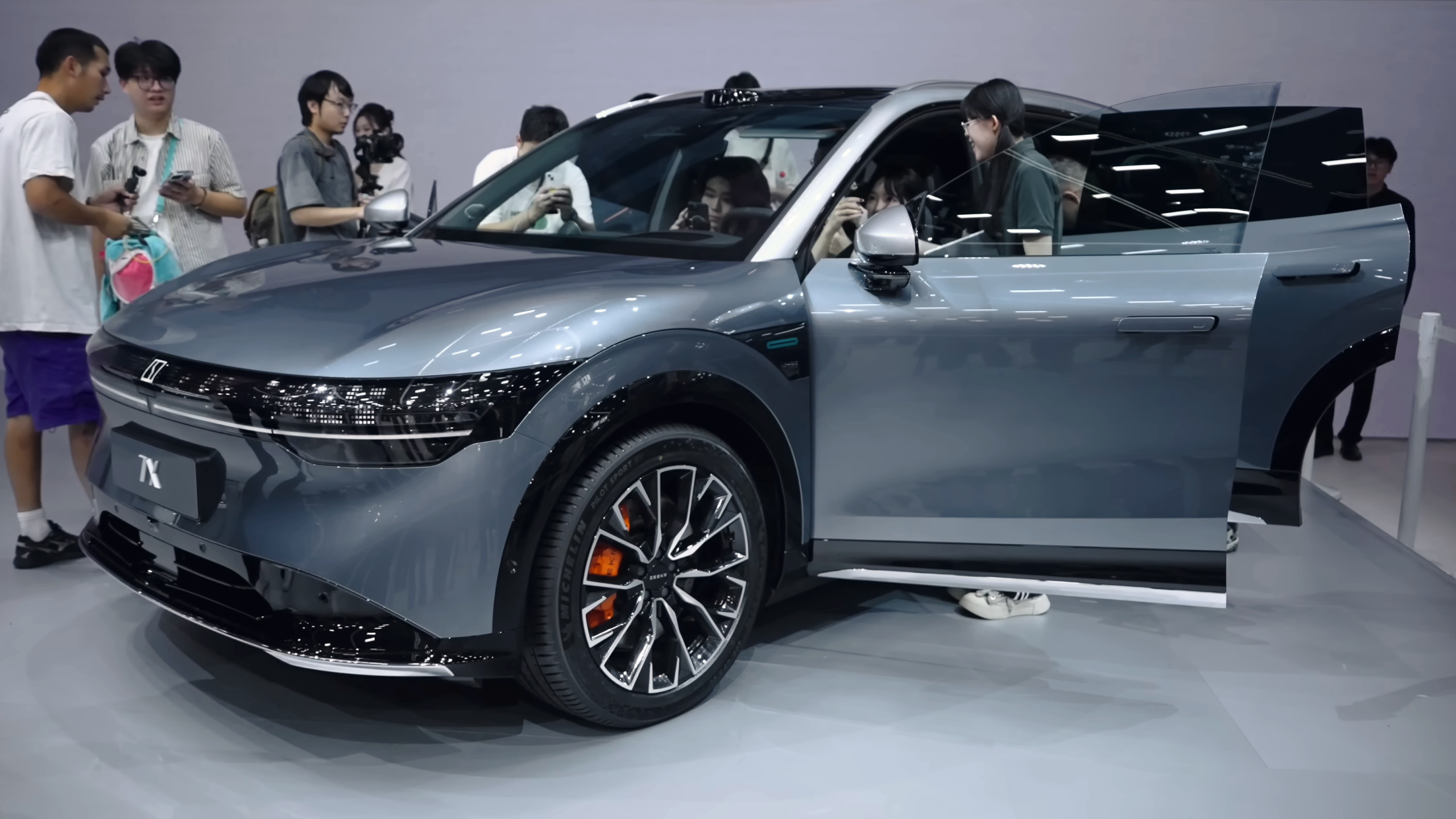
Chery climbed to third place on the strength of the iCaur V23 and iCaur 03, while Zeekr made waves with the popular Zeekr 7X. Tesla had a quieter quarter but rebounded in March with 338 units, likely boosted by Model Y deliveries.
ALSO READ: BYD Atto 3 vs Chery Omoda E5 — Malaysia 2026 Comparison
Top-Selling EV Models — Q1 2026
The Proton e.MAS 5 didn’t just lead the EV charts — it became one of Malaysia’s top-selling vehicles across ALL fuel types.
| Rank | Model | Q1 2026 Units | Starting Price |
|---|---|---|---|
| 1 | Proton e.MAS 5 | 6,701 | ~RM119,800 |
| 2 | BYD Atto 3 | 999 | ~RM149,800 |
| 3 | Proton e.MAS 7 | 754 | ~RM99,800 |
| 4 | Zeekr 7X | 696 | ~RM199,800 |
| 5 | Chery iCaur V23 | 607 | ~RM115,800 |
Proton e.MAS 5: 6,701 Units and Counting
The e.MAS 5 is a phenomenon. In January alone, it registered 3,068 units — a record for any single EV model in Malaysia. It ranked #5 among ALL vehicles (including petrol and hybrid) that month, an unprecedented achievement for a fully electric car in Malaysia.
At ~RM119,800, the e.MAS 5 sits in a sweet spot — affordable enough for middle-class Malaysian families while offering solid range and features.
BYD Atto 3: The Reliable #2
The BYD Atto 3 continues to hold its ground as Malaysia’s second-favourite EV with 999 units in Q1. Its 60.48 kWh battery and 420 km range make it a practical daily driver, though its higher price tag compared to the e.MAS 5 limits its reach.
New Challengers: Zeekr 7X and iCaur V23
The Zeekr 7X and Chery iCaur V23 are the breakout stars of 2026. Both are new entrants that have quickly found buyers, showing that Malaysian consumers are willing to explore beyond the established names.
ALSO READ: Cheapest EVs in Malaysia 2026
EV vs ICE: Market Share is Growing Fast
Here’s the headline number every industry watcher should note: EVs now make up ~7.6% of all new car registrations in Malaysia.
| Period | EV Share of TIV |
|---|---|
| Q1 2025 | ~3.4% |
| January 2026 | 9.18% |
| February 2026 | 6.4% |
| March 2026 | 6.95% |
| Q1 2026 Average | ~7.6% |
That’s more than double the share from the same period last year. At this trajectory, Malaysia could hit the 10% EV share milestone by the end of 2026.
Meanwhile, petrol vehicle registrations dropped 2.17% YoY in February, while hybrid registrations rose 4.55%. The shift towards electrification is accelerating across the board.
ALSO READ: EV vs Petrol Running Cost in Malaysia
The Tax Exemption Factor: What Changed on 1 January 2026
One of the biggest stories of 2026 is the end of CBU (fully imported) EV tax exemptions. Since 1 January 2026, imported EVs now face:
- 30% import duty
- 10% excise duty
- 10% sales tax
This means imported EVs like the Tesla Model Y, Zeekr 7X, and most BYD models are now significantly more expensive. Only vehicles that arrived in Malaysia before 28 December 2025 retained the old tax-free pricing.
However, locally assembled (CKD) EVs remain exempt from excise duty and sales tax until 31 December 2027. This gives brands like Proton (e.MAS 5 and e.MAS 7 are CKD) a massive pricing advantage.
This explains Proton’s dominance — the e.MAS 5 is locally assembled, keeping its price below RM120,000 while imported rivals face price hikes of 15-30% or more.
Planning to buy an EV this year? Check out EVSIFU’s complete home EV charging guide to get your home ready.
Charging Infrastructure Update: Where Do We Stand?
EV sales are booming, but is the charging network keeping up?
As of late 2025, Malaysia had approximately 5,360 licensed public EV chargers — comprising 3,569 AC chargers and 1,791 DC fast chargers. The government’s original target of 10,000 chargers by end-2025 was missed.
The revised target aims for 8,000 AC chargers by Q3 2026. To hit this, Malaysia needs to install over 600 chargers per month — an ambitious pace.
Key developments in the pipeline:
- Yinson GreenTech + PLUS Malaysia are building Malaysia’s first highway-integrated EV charging hub (completion expected March 2027)
- The Energy Commission (Suruhanjaya Tenaga) has streamlined EVCS licensing from 60 days to 30 days
- Major operators like Gentari, ChargeSINI, and EVGuru continue expanding networks
For condo and landed homeowners looking to install their own charger, this is increasingly the practical choice.
ALSO READ: Best Home EV Charger Malaysia 2026
What to Expect for the Rest of 2026
New Model Launches
- Proton e.MAS 7 PHEV — Already launched at RM105,800, offering up to 996 km combined range (WLTP).
- 2026 Proton e.MAS 7 EV CKD — Updated version now in showrooms from RM99,800 with equipment upgrades.
- BYD Atto 3 facelift — Expected with a larger 74.88 kWh LFP battery and 230 kW (313 PS) motor.
- BYD Shark 6 & Bao 5 — New models expanding BYD’s Malaysian lineup.
- Chery Omoda 4 — Compact EV SUV with aggressive styling.
- Xiaomi SU7 — The highly anticipated sedan from the tech giant, though Malaysian launch timing remains unclear.
- Neta S — Another Chinese EV brand expanding into Malaysia.
Policy Watch
- CKD EV tax exemption remains until end-2027, continuing to favour locally assembled models
- The government’s stance on AP (Approved Permit) pricing for new CBU EV brands — reports suggest a RM250,000 minimum price for new entrants
- BYD’s CKD factory decision at Tanjung Malim remains uncertain
Market Projections
If Q1 trends hold, Malaysia is on track for 50,000-60,000 EV registrations in 2026, which would represent roughly 8-10% of total TIV. The combination of more affordable CKD models, growing consumer confidence, and expanding charging infrastructure all point towards sustained growth.
Thinking about making the switch to EV? Start with the right home charging setup. Visit evsifu.com.my for Malaysia’s widest range of home EV chargers with professional installation.
FAQ: Malaysia EV Sales Q1 2026
How many EVs were sold in Malaysia in Q1 2026?
A total of 14,591 EVs were registered in Malaysia during Q1 2026 (January to March), representing a 113.7% increase compared to Q1 2025’s 6,827 units.
What is the best-selling EV in Malaysia in 2026?
The Proton e.MAS 5 is the best-selling EV in Malaysia in 2026, with 6,701 units registered in Q1 alone. It is also one of the top 5 best-selling vehicles overall, across all fuel types.
What percentage of new cars in Malaysia are EVs?
As of Q1 2026, EVs represent approximately 7.6% of total new car registrations in Malaysia. In January 2026, the figure reached a record 9.18%.
Did Malaysia’s EV tax exemption end?
Yes. The tax exemption for fully imported (CBU) EVs ended on 1 January 2026. Imported EVs now face import duty (30%), excise duty (10%), and sales tax (10%). However, locally assembled (CKD) EVs remain exempt from excise duty and sales tax until 31 December 2027.
Which EV brand sells the most in Malaysia?
Proton is the top-selling EV brand in Malaysia as of Q1 2026, with an estimated 7,455 units — more than triple second-placed BYD (~2,261 units). Proton’s dominance is driven by the affordable, locally assembled e.MAS 5 and e.MAS 7.
What are the cheapest EVs in Malaysia in 2026?
The most affordable EVs in Malaysia include the Proton e.MAS 7 EV from RM99,800, the Proton e.MAS 5 from ~RM119,800, and the Chery iCaur V23 from ~RM115,800. CKD models remain cheaper due to continued tax exemptions.
How many EV chargers are there in Malaysia?
As of late 2025, Malaysia had approximately 5,360 licensed public EV chargers (3,569 AC + 1,791 DC fast chargers). The government is targeting 8,000 AC chargers by Q3 2026.
Conclusion
Q1 2026 has been a landmark quarter for Malaysia’s EV market. With 14,591 registrations and a 113.7% YoY growth rate, the momentum is undeniable. Proton’s e.MAS lineup has proven that affordable, locally assembled EVs can dominate the market, while brands like BYD, Chery, and Zeekr continue to build their presence.
The end of CBU tax exemptions has reshaped the competitive landscape, clearly favouring CKD models. For buyers, this means the best EV deals in Malaysia right now come from locally assembled options.
Whether you’re already driving an EV or planning to make the switch, having a reliable home charging setup is essential. Visit evsifu.com.my to browse home EV chargers with professional installation across Malaysia — because the best way to charge is right at home.
ALSO READ: EV Charger Installation for Condos & Landed Homes in Malaysia