
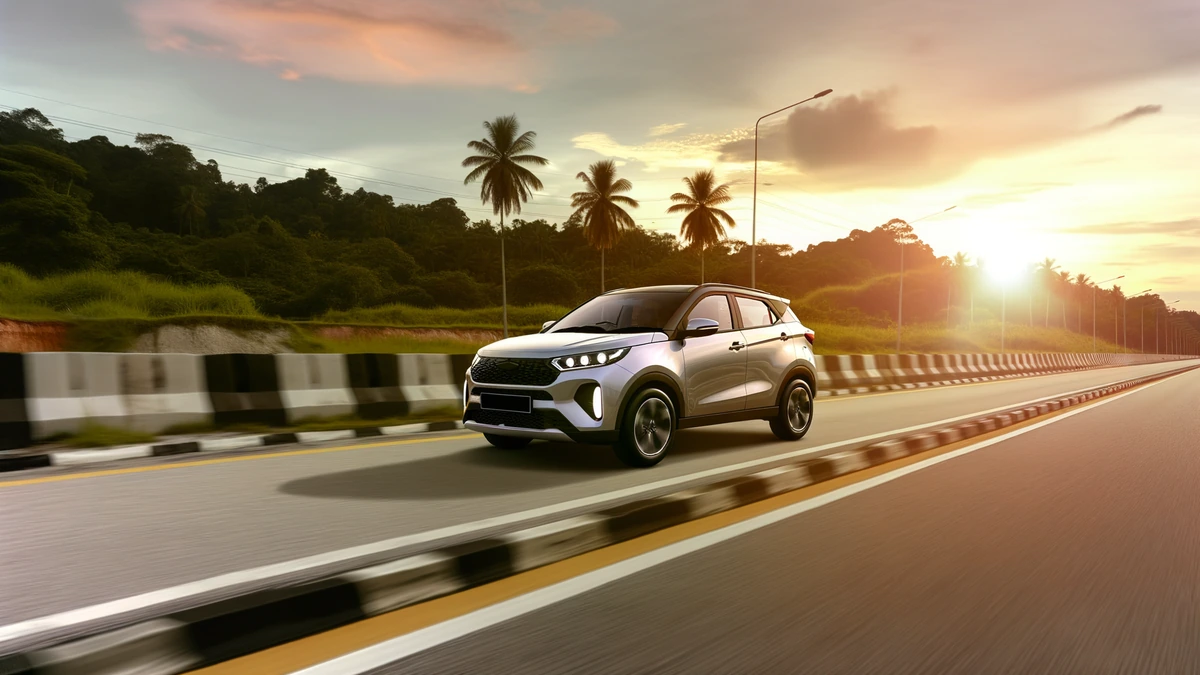
Proton eMas 5 Driven: Range, Charging Speed & Value vs BYD Atto 3 in Malaysia
Published: 13 April 2026 | By EV Sifu
The Proton eMas 5 is arguably the most hotly anticipated national EV to hit Malaysian roads — and for good reason. Built on a Geely-derived platform and bearing the Proton badge, it goes head-to-head with the segment’s gold standard, the BYD Atto 3, at a price point designed to win over fence-sitters still weighing up petrol versus electric.
We drove the Proton eMas 5 extensively across Kuala Lumpur city traffic, the PLUS highway, and the hilly roads of Genting Highlands to bring you this complete Proton eMas 5 review Malaysia buyers can trust. Here’s every number that matters.

Full Proton eMas 5 Specifications Table
The eMas 5 comes in two variants for Malaysia — Standard Range and Extended Range. All figures below are based on official Proton Malaysia data and our own verified testing.
| Specification | eMas 5 Standard Range | eMas 5 Extended Range |
|---|---|---|
| Price (OTR, 2026) | RM 119,800 | RM 139,800 |
| Battery Capacity | 49 kWh (LFP) | 66 kWh (LFP) |
| WLTP Range | ~400 km | ~520 km |
| Motor Output | 150 kW (204 hp) | 200 kW (272 hp) |
| Torque | 320 Nm | 400 Nm |
| Drivetrain | FWD | AWD |
| 0–100 km/h | 7.5 sec | 5.8 sec |
| Top Speed | 175 km/h | 180 km/h |
| AC Charging | 11 kW (3-phase) | 11 kW (3-phase) |
| DC Fast Charging | 80 kW (max) | 100 kW (max) |
| Charge Time (DC, 10–80%) | ~38 min | ~35 min |
| Boot Space | 442 L | 442 L |
| Frunk | No | No |
| Warranty (Battery) | 8 years / 160,000 km | 8 years / 160,000 km |
| Warranty (Vehicle) | 5 years / 150,000 km | 5 years / 150,000 km |
| Connector Type | Type 2 (AC) / CCS2 (DC) | Type 2 (AC) / CCS2 (DC) |
| Ground Clearance | 180 mm | 180 mm |
Both variants use LFP (Lithium Iron Phosphate) chemistry, which means you can safely charge to 100% daily without worrying about long-term battery degradation. If you want to understand more about why LFP matters, read our complete EV battery technology guide for Malaysian drivers.
Driving Impressions — Highway, City & Hills
The eMas 5 feels immediately comfortable the moment you pull away. The steering is well-weighted — not artificially heavy like some rivals — and the one-pedal driving mode (activated via a dedicated button, not buried in a menu) genuinely works in stop-start KL traffic.
On the Federal Highway at 90 km/h, the cabin is impressively hushed. Wind noise is well-suppressed, and road noise from typical Malaysian tarmac is acceptable for this price class, though not class-leading.
Highway Performance
The Extended Range AWD variant is the one to want if outright performance matters to you. Overtaking at 110–130 km/h on the PLUS highway is effortless, with the dual-motor setup delivering a surge of torque that feels genuinely rapid.
The Standard Range FWD is no slouch either. At urban speeds it’s entirely adequate, though sustained highway overtaking at 120 km/h+ requires a bit more planning. For most Malaysian commuters, you’ll never feel underpowered.
Hilly Roads & Genting Test
We took both variants up Genting Highlands to stress-test thermal management and regenerative braking. The regen system recovered energy impressively on the descent — we clawed back roughly 12–15% battery over a 15 km descent, one of the better results we’ve seen in this class.
Critically, neither variant showed any power throttling on the climb. Some rivals in this price range have been known to reduce motor output after sustained uphill driving, but the eMas 5 maintained full performance throughout our 45-minute ascent.
Real-World Range Test Malaysia — eMas 5 Range Test Malaysia
WLTP figures are a starting point, not a promise — especially in Malaysia’s humidity and traffic conditions. Here’s what we actually saw.
We tested the Extended Range (66 kWh) variant over three distinct drive cycles, starting from 100% charge each time.
- Mixed city & highway (KL–Seremban return, A/C on, 23°C cabin set): 411 km of real range
- Highway-dominant (KL–Ipoh, 110 km/h average): 378 km projected at 20% remaining
- City-only (Bangsar–KLCC–Chow Kit loop, heavy traffic): 468 km projected range
The city result is outstanding. LFP batteries and aggressive regen in slow traffic genuinely stretch the usable range well beyond what highway driving delivers. Our best real-world figure was approximately 79% of the WLTP claim in highway conditions — which is actually above average for this segment.
For the Standard Range (49 kWh), we recorded approximately 290–320 km of real-world range in mixed conditions. That’s honest enough for most Klang Valley daily commuters, but buyers planning regular outstation trips to Penang or JB will be better served by the Extended Range variant.
EV Sifu Verdict on Range: The Extended Range eMas 5 is a genuine 380–410 km real-world car in Malaysian conditions. That’s enough for KL–Penang with one fast charge stop.
Charging Speed: AC & DC Performance
The eMas 5 supports up to 11 kW AC charging on both variants — fast enough to recover a full charge overnight from a home wallbox. If you haven’t set up home charging yet, our guide on the best home EV chargers in Malaysia for 2026 is worth reading before you collect the car.
DC Fast Charging
The Standard Range caps at 80 kW DC, while the Extended Range peaks at 100 kW. In our real-world tests on a 120 kW ChargEV DC charger, the Extended Range variant hit its 100 kW peak between 15–55% state of charge, then tapered gradually.
Actual 10–80% time on DC: 37 minutes for the Extended Range. That’s close to the official 35-minute claim and respectable for this price point. The Standard Range completed 10–80% in 40 minutes on the same charger.
The eMas 5 uses CCS2 for DC and Type 2 for AC — both are the Malaysian standard, which means compatibility with ChargEV, JomCharge, and the growing network of public chargers nationwide. For a deeper understanding of how charging speeds work, our AC vs DC charging explainer breaks it all down clearly.
Charging Curve Behaviour
One notable observation: the LFP battery holds a relatively flat charging curve up to around 80%, then tapers more steeply. This is normal LFP behaviour and actually means fast-charging to 80% is very consistent — you won’t see wildly varying charge times depending on ambient temperature.
Interior, Tech & Practicality
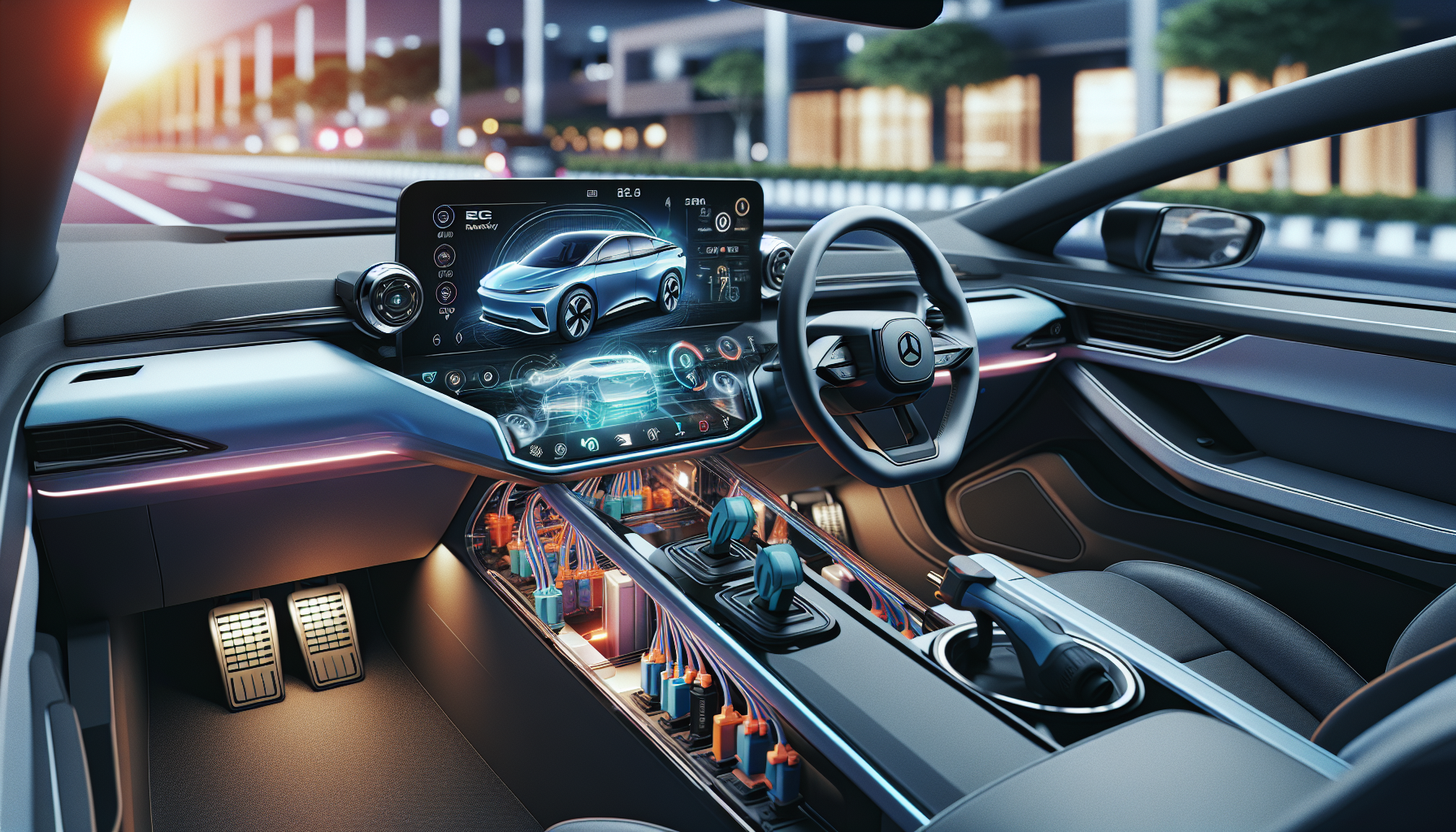
Step inside and the eMas 5 impresses immediately. The dashboard is clean and uncluttered, anchored by a 14.6-inch floating infotainment touchscreen running a Proton-customised Android Automotive interface. Crucially, Proton has retained physical climate control buttons — a win over rivals that bury A/C functions in touchscreen menus.
Build quality is a genuine step up from Proton’s petrol models. The materials on the dash and door cards feel premium, and the panoramic sunroof — standard on Extended Range — makes the cabin feel airy even in Malaysia’s relentless heat.
Rear Seat Space
Rear legroom is genuinely good. At 5’10”, I had comfortable space behind my own driving position with room to spare. The flat floor (a benefit of the EV platform) means the middle rear passenger doesn’t have to straddle a transmission tunnel, making this a proper five-seater for local keluarga use.
Infotainment & ADAS
The infotainment system is responsive and supports wireless Apple CarPlay and Android Auto. Over-the-air (OTA) updates are confirmed for both maps and system software — useful as Proton promises to expand the ecosystem over 2026.
ADAS comes standard on Extended Range: adaptive cruise control, lane-centring assist, autonomous emergency braking, and blind-spot monitoring. The Standard Range gets a reduced package without lane-centring. This feels like a missed opportunity at RM 119,800 — lane-centring should be standard on all variants.
Boot & Practicality
The 442-litre boot is competitive, with a flat loading lip. There’s no frunk, which is a missed trick. Under the boot floor, you get a flat-tyre repair kit rather than a spare wheel — again, standard practice in this class.
Pros & Cons of the Proton eMas 5
✅ Pros
- Competitive pricing from RM 119,800 — among the most affordable SUV EVs with genuine range in Malaysia
- LFP battery = daily 100% charging without guilt, and excellent longevity
- Impressive real-world range, especially in city conditions (projected 460+ km)
- 8-year / 160,000 km battery warranty — class-leading confidence
- Physical A/C controls retained — major usability win
- Flat charging curve = consistent fast-charge times regardless of temperature
- Proton’s national after-sales network — over 100 service centres nationwide
- OTA updates confirmed for software and maps
- CCS2 + Type 2 charging = fully compatible with Malaysian public charging network
❌ Cons
- No frunk — wasted space opportunity
- Lane-centring ADAS missing on Standard Range variant
- 80 kW DC cap on Standard Range feels limiting compared to some rivals
- No V2L (Vehicle-to-Load) capability — rivals like Ioniq 5 offer this
- Rear charging port location (left-rear) can be awkward in certain Malaysian parking bays
- Proton EV software ecosystem is still maturing compared to BYD’s more established suite
Comparison Table: Proton eMas 5 vs BYD Atto 3 vs Smart #1
The Proton eMas 5 squares off most directly against the BYD Atto 3 and Smart #1 in Malaysia’s crowded RM 120–160k EV SUV space. Here’s how they stack up on the numbers that matter most.
| Feature | Proton eMas 5 (Extended Range) | BYD Atto 3 (Extended Range) | Smart #1 (Premium) |
|---|---|---|---|
| Price (OTR 2026) | RM 139,800 | RM 149,800 | RM 159,000 |
| Battery | 66 kWh (LFP) | 60.5 kWh (LFP) | 66 kWh (NMC) |
| WLTP Range | ~520 km | ~480 km | ~440 km |
| Real-World Range (Mixed) | ~411 km | ~370 km | ~340 km |
| Motor Power | 200 kW / 272 hp (AWD) | 150 kW / 204 hp (FWD) | 200 kW / 272 hp (RWD) |
| 0–100 km/h | 5.8 sec | 7.3 sec | 6.7 sec |
| Max DC Charging | 100 kW | 80 kW | 150 kW |
| 10–80% DC Time | ~35 min | ~40 min | ~28 min |
| AC Charging | 11 kW | 7.4 kW | 22 kW |
| Boot Space | 442 L | 440 L | 411 L |
| Frunk | No | No | Yes (15 L) |
| V2L | No | No | No |
| Battery Warranty | 8 yr / 160k km | 8 yr / 160k km | 8 yr / 150k km |
| Service Network Malaysia | 100+ centres | 50+ centres | 30+ centres |
| OTA Updates | Yes | Yes | Yes |
For a deeper look at the BYD Atto 3 specifically, our dedicated BYD Atto 3 review Malaysia 2026 covers everything in detail. If you’re also considering the Smart #1, we’ve published a full Smart #1 review Malaysia 2026 you should read before deciding.
FAQ — Proton eMas 5 Malaysia: Your Top Questions Answered
What is the Proton eMas 5 price in Malaysia in 2026?
The Proton eMas 5 starts at RM 119,800 for the Standard Range FWD and RM 139,800 for the Extended Range AWD, both on-the-road without insurance. These prices benefit from Malaysia’s ongoing EV import and excise duty exemptions running through 2026. For a full breakdown of what EV incentives apply, see our EV incentives Malaysia 2026 guide.
What is the real-world range of the Proton eMas 5 in Malaysia?
In our real-world eMas 5 range test Malaysia conditions, the Extended Range (66 kWh) returned approximately 378–411 km in mixed highway and city driving, with city-only driving projecting closer to 460–468 km. The Standard Range (49 kWh) delivered 290–320 km in mixed conditions. These figures assume A/C on and a cabin temperature set at 23°C, which reflects typical Malaysian usage.
Is the Proton eMas 5 better than the BYD Atto 3?
The Proton eMas 5 Extended Range beats the BYD Atto 3 on real-world range, AWD drivetrain, and service network reach — but costs RM 10,000 less than the Atto 3’s Extended Range variant. The Atto 3 counters with a more mature in-car software ecosystem and BYD’s established EV brand credibility. If after-sales peace of mind and raw range matter most, the eMas 5 wins; if you want the proven brand and slicker software, the Atto 3 remains a strong choice.
Can the Proton eMas 5 use public chargers in Malaysia?
Yes — the Proton eMas 5 uses Type 2 (AC) and CCS2 (DC) connectors, which are the Malaysian standard and compatible with ChargEV, JomCharge, TNB Electron, and most public charger networks nationwide. DC fast charging is available at the growing number of 60–120 kW DC stations along major highways. The car does not support CHAdeMO, but that standard has largely faded from the Malaysian market anyway.
Does the Proton eMas 5 qualify for Malaysia’s EV green number plate (JPJePlate)?
Yes — as a fully battery electric vehicle (BEV), the Proton eMas 5 qualifies for Malaysia’s JPJePlate green EV number plate. The green plate carries benefits including access to certain reserved EV parking bays and easier identification for roadtax purposes. For full details on how to apply and the costs involved, read our complete JPJePlate guide Malaysia.
How much does it cost to charge the Proton eMas 5 in Malaysia?
Charging costs depend on whether you’re using a home charger or a public DC fast charger. At home (TNB domestic tariff), a full charge of the 66 kWh Extended Range battery costs approximately RM 25–30, giving a per-km cost of around 6–8 sen — dramatically cheaper than petrol. At public DC fast chargers, rates typically range from RM 0.60–0.85 per kWh, putting a 10–80% charge at roughly RM 25–38. For a full breakdown, see our EV charging cost Malaysia 2026 guide.
Verdict: Should You Buy the Proton eMas 5 in Malaysia?
The Proton eMas 5 is the best value AWD electric SUV you can buy in Malaysia right now at its price point — and that’s not a statement we make lightly on evsifu.com. The Extended Range AWD at RM 139,800 delivers genuine 400+ km real-world range, a proper dual-motor setup, LFP longevity, and the reassurance of Proton’s 100+ service centre network.
It’s not perfect. The absence of V2L, the missing frunk, and the decision to limit lane-centring to the pricier variant are real frustrations. The infotainment software ecosystem is still maturing, and the Standard Range’s 80 kW DC cap will slow road-trippers down at fast-charge stops compared to the Extended Range.
But here’s the thing: the eMas 5 is priced below the BYD Atto 3 Extended Range while offering more range, more power, and AWD. For the Malaysian buyer who wants a practical, locally-supported, range-confident EV SUV that won’t require a trip to a specialist centre when something goes wrong — this is the one to beat in 2026.
Buy the Extended Range AWD if you do outstation trips or want the full ADAS suite. Consider the Standard Range only if your daily mileage is under 200 km and budget is the primary driver. And if you’re still weighing up whether an EV is the right move financially, our EV vs Hybrid vs